

Buzzin’ down California
20 min read Aug 29, 2026
Nearly 10 years ago, I was getting my daily fill of automotive news when my eyes were drawn to a concept car. It was unmistakably a Volkswagen van, the bottom a greenish yellow, the top in silver with accents that harken back to buses of the past.
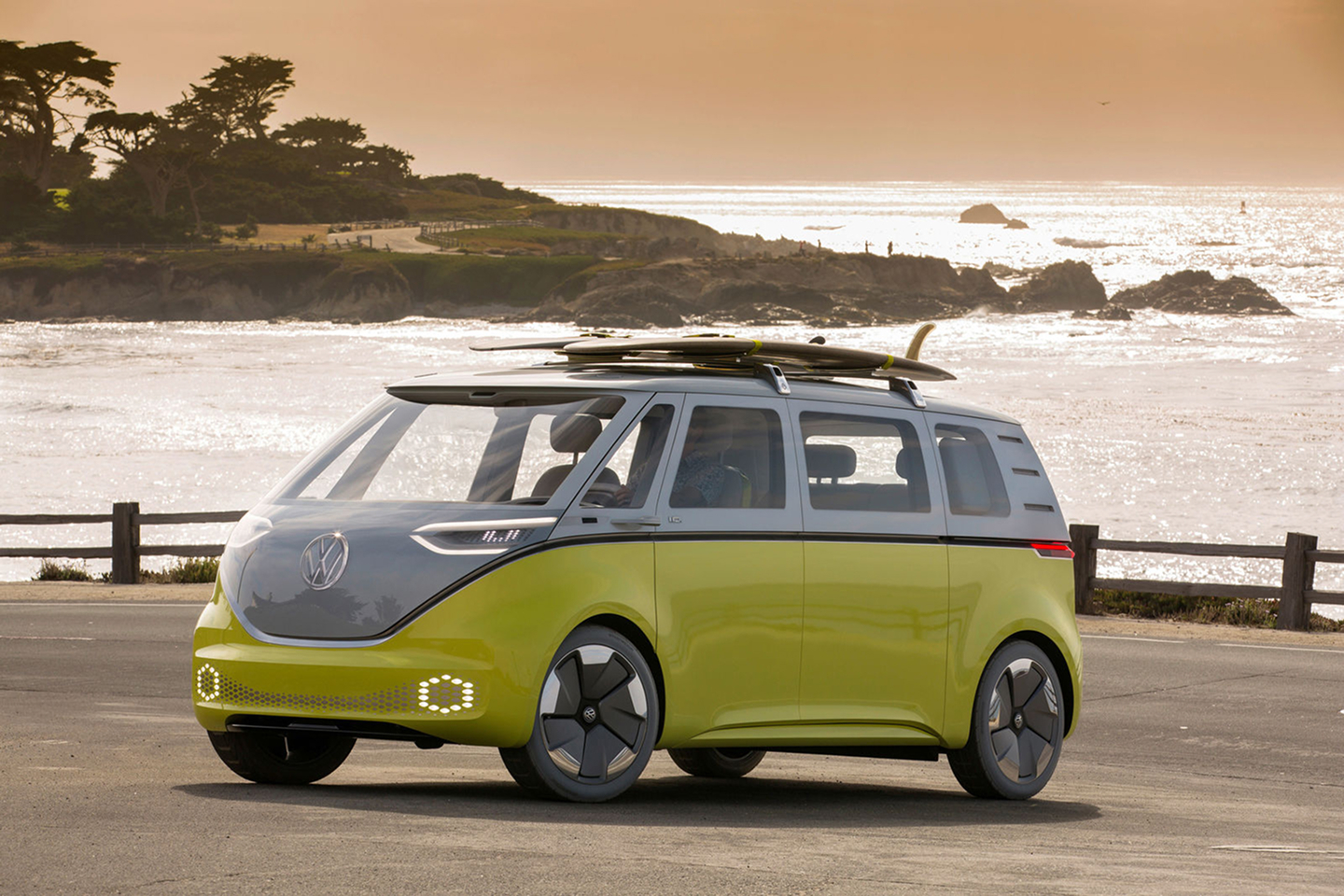
We were already a Volkswagen family. When my wife and I met, I was driving a Mark 6 GTI. My wife drove a yellow Beetle with retro-styled wheels and a color-matched interior. We had just gotten married, and we weren’t in the market for a family vehicle, but I made a mental note to keep track.
Fast-forward a decade, and both vehicles are gone. We replaced one with a full-size SUV capable of hauling the two of us and our two kids, and occasionally two grandparents as well. The other we replaced with an e-Golf.
While I was thinking of upgrading from my GTI to something sportier, I’d taken the road trip through the North Bay that a friend and I call the Gran Turo. My realization after that trip was that the Porsche 911, though it looked and sounded sportier than the GTI, was, around town, too similar. So I gave up the dream of a sports car, but the dream of a quirky family van was still there.
After years of delays, Volkswagen brought the ID. Buzz to America, and we waited for demand to settle and for the right dealership offering it in the right color at the right price. Late last year, we drove home our first minivan, the 2025 ID. Buzz First Edition in Candy White and Energetic Orange. This was the first time I’d purchased a dream vehicle.
 Leica CL · 56mm · f/2.5 · 1/640 ·
ISO 100
Leica CL · 56mm · f/2.5 · 1/640 ·
ISO 100
After a few months of getting acquainted with it — grocery runs, school drop-offs and pickups — we knew it was time to put it through its paces on an extended road trip. The kids had a week off, so my wife charted a path down to visit friends who live in Pasadena, stopping in San Luis Obispo on the way in, Paso Robles on the way back.
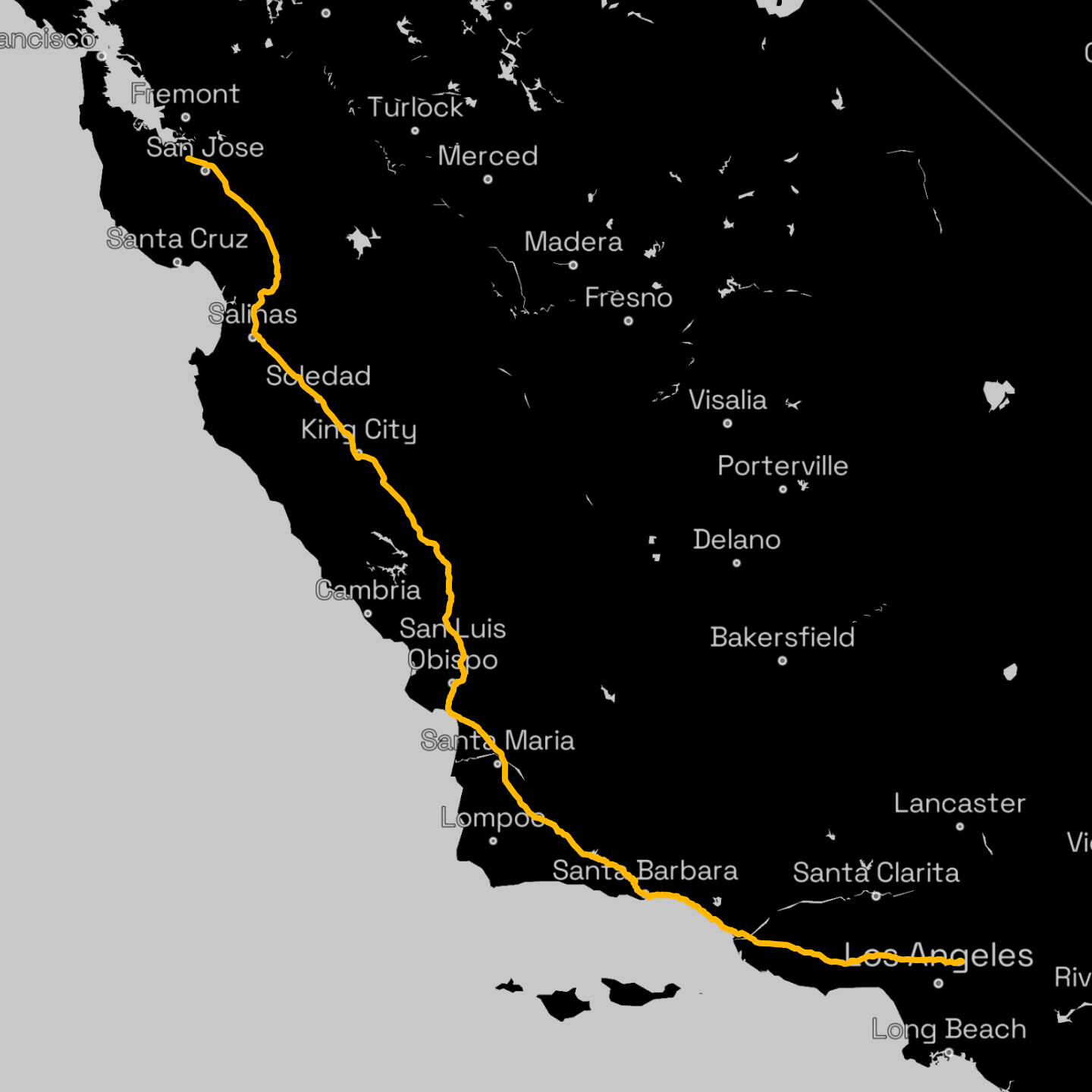
In my 20s, a trip down to SoCal meant starting early, stopping only for gas and lunch, and making it into Los Angeles by early afternoon. But with kids in tow and an electric car that needs to be recharged, we knew it was best to take it slow. We’d made this trip once before as a family, that one via a crampted three-row SUV. The ID. Buzz has a flat floor, which made it easy to fit four people and plenty of stuff.
SLO
On the way in, we made our first overnight stop in San Luis Obispo, and even though my wife had planned every detail, there was one thing we hadn’t thought of — we were driving on Valentine’s night, and all the hotels in the area were booked out.
So we had our first lesson in hotel management: it’s possible to not receive a room even though we had reserved, paid for, and checked into that room. We got “walked” from that hotel, which is industry parlance for being moved to another hotel that isn’t part of the same chain. We waited while the staff between the different hotels argued and negotiated with each other. That night had turned into a game of first come, first served. There was still one room left in the neighboring hotel.
After that surprise, we settled in and got ready to explore San Luis Obispo. These days, with our kids older, both sleeping through the night and not too much of a handful for one person to manage, my wife lets me spend the early mornings out running wherever we are.
 iPhone 16 Pro · 5x · f/2.8 ·
1/170 · ISO 64
iPhone 16 Pro · 5x · f/2.8 ·
1/170 · ISO 64
San Luis Obispo was perfect for it. The weather was almost the same as it is here in the Bay Area — chilly in the morning, but by the end of a one or two-hour run, it leaves me warm enough to continue the day in a T-shirt. There was a bit of elevation, which kept me focused, and the streets were clear early in the morning.
 iPhone 16 Pro · 5x · f/2.8 ·
1/850 · ISO 64
iPhone 16 Pro · 5x · f/2.8 ·
1/850 · ISO 64
That morning I did a long run, and since I couldn’t find a suitable route, I did two six-mile loops starting from the hotel, which gave me an excuse in the middle to check in with the family, refill my water bottle, and grab more fuel.
 iPhone 16 Pro · 5x · f/2.8 ·
1/470 · ISO 50
iPhone 16 Pro · 5x · f/2.8 ·
1/470 · ISO 50
After my run, and after scarfing down some hotel breakfast, we packed into the car — bags and snacks and all the other things we pick up on a road trip, and still room to spare. Just as I was pulling out of the hotel parking lot, a man driving an angry-looking Ford Raptor waved at us and rolled down his window to tell us, with a childlike grin, how much he loves our car.
 Leica CL · 56mm · f/2.5 · 1/1000
· ISO 100
Leica CL · 56mm · f/2.5 · 1/1000
· ISO 100
We continued on to the SLO Children’s Museum. It sits in a dense cultural corridor around the San Luis Obispo Mission, one of the missions the Spaniards strung along the El Camino Real. So in this historic downtown, you find the usual mix of restaurants and stores, but also this children’s museum.
The day we were there, it was crowded with locals bringing their kids for a Saturday adventure. It had the classic exhibit types — kids could pretend to go shopping or take on any number of other occupations, and there were water tables and stations to build with different materials. Though the footprint is modest, they use multiple floors to pack it full. After our visit, we took a stroll around downtown and got a bite to eat.
 Leica CL · 18mm · f/3.2 · 1/15 ·
ISO 100
Leica CL · 18mm · f/3.2 · 1/15 ·
ISO 100
We then checked out the SLO Museum of Art. We’re suckers for art museums and wouldn’t miss them, even if they’re tiny or out of the way. This one, from the outside, is a beauty — covered in murals, part of a rotating public art program. The current one, MOMO’s “Meter & Time,” covers all the walls with wave-like colors and pattern work. It will be replaced by the work of another artist eventually.
 Leica CL · 18mm · f/2.8 · 1/160 ·
ISO 100
Leica CL · 18mm · f/2.8 · 1/160 ·
ISO 100
The exhibitions inside didn’t take us long to see, so my wife and I took turns — one of us exploring the art while the other accompanied the kids in the lobby, where the staff had set up pencils and paper for visitors to draw on.
 Leica CL · 56mm · f/3.2 · 1/160 ·
ISO 250
Leica CL · 56mm · f/3.2 · 1/160 ·
ISO 250
Pasadena
The next morning, we packed up and continued on the road down. The quiet cabin let us relax in a way we hadn’t before on roadtrips. While my wife drove, I reclined back without hitting the seat behind me.
The charging experience, though we had feared it would be onerous and full of waiting around for other people to finish or for the car to finish, was anything but. We’d keep an eye on Electrify America chargers along the way, and when we neared 20%, we’d head off the road to charge. As a bonus, Volkswagen and Electrify America gave us 500 kilowatt hours of free charging to use within the first year of ownership. That comes out to roughly 10 charges from 20% up to 80%.
 Leica CL · 56mm · f/1.4 · 1/160 ·
ISO 100
Leica CL · 56mm · f/1.4 · 1/160 ·
ISO 100
These chargers could max out the ID. Buzz’s 150 kilowatt max rate, and while we let the car refuel, we went in to refuel ourselves. We stopped multiple times in Santa Barbara, both on the way in and out. Off the beaten path, across from the bank where we plugged the Buzz to charge, we found Taqueria La Unica, serving expertly executed Mexican street food. Casa Comal, on another stop, featured made-to-order blue corn tortillas.
 iPhone 16 Pro · 1x · f/1.8 ·
1/290 · ISO 64
iPhone 16 Pro · 1x · f/1.8 ·
1/290 · ISO 64
 iPhone 16 Pro · 1x · f/1.8 ·
1/105 · ISO 100
iPhone 16 Pro · 1x · f/1.8 ·
1/105 · ISO 100
We then headed to Pasadena, one of those places I’d been meaning to spend more time in — my wife and I had only come nearby when we visited the Huntington Gardens for a day.
Homebase
My wife had booked us into the Rose and Crown Hotel. At first, it was the Imperial 400 Motel, back when Colorado Boulevard was still Route 66. That highway, built 100 years ago, started in Chicago and made its way down to Pasadena, where it ended. It was known for its motels and restaurants with signage that has shaped American visual culture over the last century.
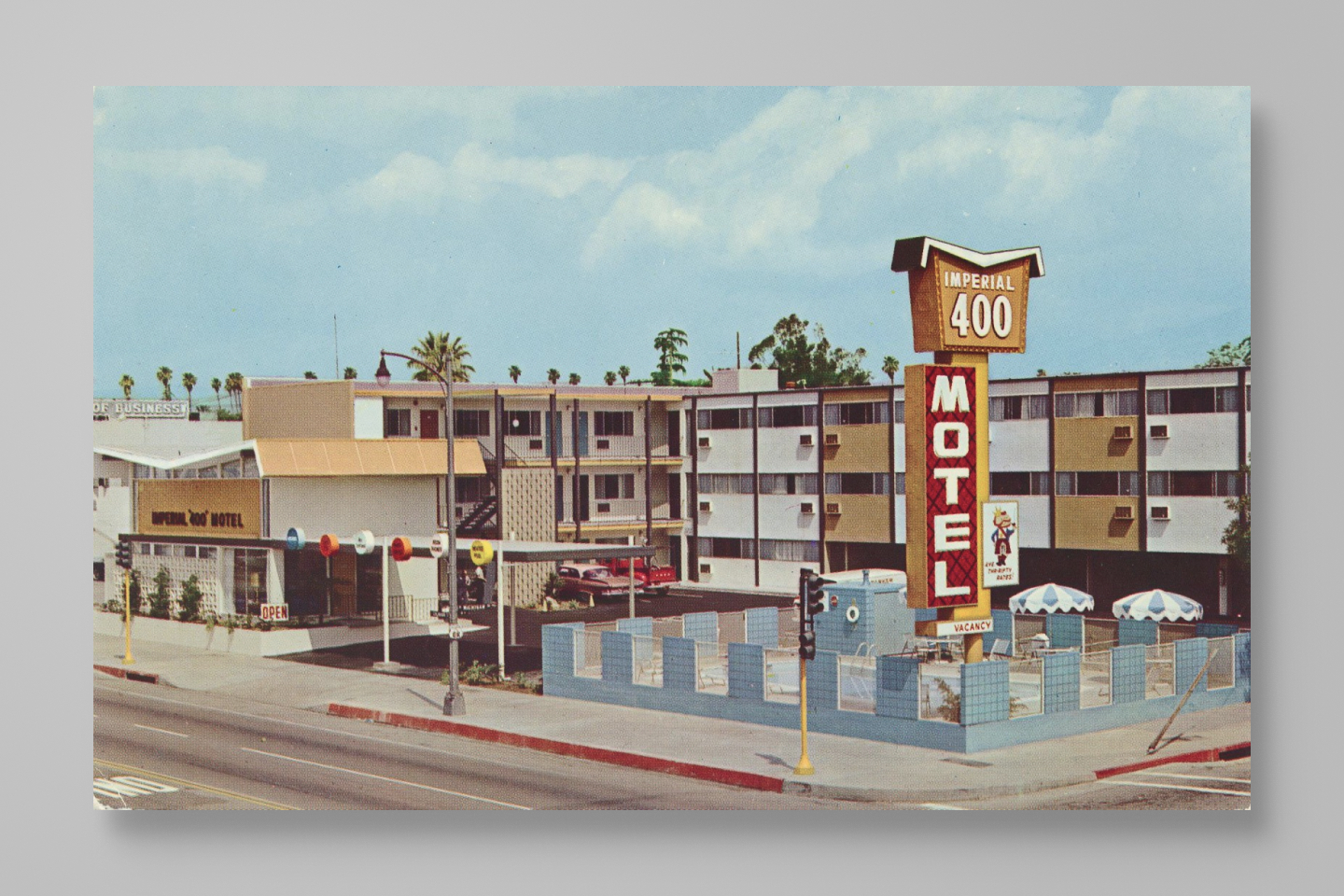
This motel, like many of the others, has been updated over the years — part of a trend of old motels being converted into boutique hotels, or at least ones with modern amenities. In the ’60s, the Imperial 400 was a chain of motor hotels built around a space-age, Googie look. The lobbies had a gull-wing shape that was mirrored in the swimming pool. Though most of these architectural elements are gone, the pool still retains its Googie shape.
 Leica CL · 56mm · f/1.4 · 1/6400
· ISO 100
Leica CL · 56mm · f/1.4 · 1/6400
· ISO 100
 Leica CL · 18mm · f/2.8 · 1/320 ·
ISO 100
Leica CL · 18mm · f/2.8 · 1/320 ·
ISO 100
The hotel was perfect for what we were doing. It was easy for me to drive nearby to charge the car or find food.
 Leica CL · 18mm · f/5 · 1/50 ·
ISO 10000
Leica CL · 18mm · f/5 · 1/50 ·
ISO 10000
Running through Caltech
Again, I made some runs while we stayed in Pasadena, choosing routes that went through the Caltech campus. This university, even though it’s so impactful, is quite compact — taking me just a few minutes to get from one side to the other. The campus was quiet; aside from one or two students with backpacks, I shared the grounds with landscapers and maintenance staff.
San Pasqual Walk, the main thoroughfare, was shaded by trees, many of which towered above the buildings lining the path — a contrast to the hotter, more exposed sidewalks I’d run on Colorado Boulevard. Nearby, the neighborhood felt familiar, like a scaled-down Palo Alto. It had the same hallmarks of professors’ houses — styles from mission revival to craftsman, to the occasional minimal contemporary home.
Lunar New Year at Hsi Lai Temple
We planned to have a low-key Lunar New Year dinner with our friends, but they’d been invited by local friends of theirs to a bigger gathering. Those hosts invited us over too, even though they didn’t know us. They welcomed us in as if we were longtime friends.
 Leica CL · 18mm · f/2.8 · 1/50 ·
ISO 2500
Leica CL · 18mm · f/2.8 · 1/50 ·
ISO 2500
Lunar New Year is the most important time of year for many in Asia, and I could see my wife connect with a part of her that had been growing dormant. The dinner was a feast, featuring delicacies showcasing their love for food.
By this time, my Chinese had improved enough that I no longer felt like a hopeless foreigner — a plus one who tries his best to laugh while missing every joke. This time I was able to play a social deduction game, though I was reminded of my limited working vocabulary. We stayed late into the night and headed back, the kids falling asleep in their car seats.
In the morning, we woke up on Lunar New Year day for a more spiritual experience. We drove over to pick up our friends and then to their children’s school, where a teacher smiled as we drove in, later telling one of our friends she loved our car. We packed both families into the ID. Buzz and began our journey to Hacienda Heights. Our host family, being car people, were ecstatic to take a drive in it. Our children were happy to have friends along.
Our destination was Hsi Lai Temple, one of the largest buddhist temples in the western hemisphere. Our friends had been going there for years, and even though they’re not strictly Buddhist, they feel the importance of connecting to their cultural and spiritual roots. We dropped the two mothers and children off near the entrance, all of them easily exiting out one side of the car, and the two dads went out to find parking, which felt for a while like it was going to be a futile exercise. Finally, we found street parking in a nearby neighborhood, tight as it was. I don’t know what we would have done if we brought two vehicles.
 Leica CL · 18mm · f/2.8 · 1/800 ·
ISO 100
Leica CL · 18mm · f/2.8 · 1/800 ·
ISO 100
This temple is gigantic, situated on a hill overlooking the valley below. On normal days, parking is easy to find, but on Lunar New Year, I was surprised we found anything within walking distance.
 Leica CL · 18mm · f/2.8 · 1/1250
· ISO 100
Leica CL · 18mm · f/2.8 · 1/1250
· ISO 100
Once we made our way to the temple, I felt transported far away to a mountainside in China. With the number of people speaking languages aside from English, I felt like I wasn’t in the United States anymore.
 Leica CL · 56mm · f/1.4 · 1/4000
· ISO 100
Leica CL · 56mm · f/1.4 · 1/4000
· ISO 100
The center of the temple grounds hosted a never-ending set of demonstrations and performances. We strolled through the buildings, prayed to the idols, and visited the art museum before making our way to the cafeteria.
 Leica CL · 56mm · f/1.4 · 1/6400
· ISO 100
Leica CL · 56mm · f/1.4 · 1/6400
· ISO 100
The food here, like at other Buddhist temples, is not bought — you make a donation and receive food. And the food was delicious. It felt home-cooked, served by people who treated me like their child or their grandchild. It was vegetarian, full of love, with a variety of vegetables and tofu. After we’d eaten our fill and made our way around the grounds one last time, we packed back into the Buzz and returned to Pasadena.
 Leica CL · 56mm · f/1.4 · 1/2500
· ISO 100
Leica CL · 56mm · f/1.4 · 1/2500
· ISO 100
Kidspace Children’s Museum
The next day, the family who’d been hosting us in Pasadena was busy with work and school, so we were on our own and spent the day at the Kidspace Children’s Museum. It sits within the parklands adjacent to the Rose Bowl. I’ve read that it started as a small community project, but by the time we were there, decades after its founding, it had become a campus full of things for our kids to enjoy.
 Leica CL · 18mm · f/5 · 1/320 ·
ISO 100
Leica CL · 18mm · f/5 · 1/320 ·
ISO 100
There were the expected elements of any children’s museum — chalk to draw on the ground, construction materials to build whatever they could imagine. But there was also a natural part of the park where the kids could walk trails and discover activities peppered among them. I loved the Physics Forest, full of demonstrations that give children an intuitive understanding of pressure, momentum, and inertia.
 Leica CL · 56mm · f/1.4 · 1/12000
· ISO 100
Leica CL · 56mm · f/1.4 · 1/12000
· ISO 100
We thought we’d step away, get lunch, and head home, but our kids were having such a good time that we stayed from opening until they shut their doors.
 Leica CL · 56mm · f/1.4 · 1/4000
· ISO 100
Leica CL · 56mm · f/1.4 · 1/4000
· ISO 100
I was happy that it was our kids, and not a packed schedule, deciding when we’d leave.
 Leica CL · 56mm · f/1.4 · 1/1250
· ISO 100
Leica CL · 56mm · f/1.4 · 1/1250
· ISO 100
LA
Rainy LA
On our final day, after checking out of the hotel, my wife had planned for us to spend the morning in Los Angeles. Us being Californians in California, we plan for every day to be sunny and clear — but this day we were fortunate to be blessed with rain. It was one of those rare days when the clouds were intent on drenching us.
 Leica CL · 56mm · f/1.4 · 1/1000
· ISO 100
Leica CL · 56mm · f/1.4 · 1/1000
· ISO 100
The car took adjusting at first, since you sit higher up and its short nose makes it feel like driving a delivery van. In gridlock, though, that was all upside. As we snaked through the streets, I swiped the touchpad on the ceiling, which switched the electrochromic roof from opaque to transparent. The children called out the patterns they noticed in the combining raindrops.
 Leica CL · 56mm · f/1.4 · 1/6400
· ISO 100
Leica CL · 56mm · f/1.4 · 1/6400
· ISO 100
We made our way over to the Los Angeles County Museum of Art (LACMA), a place we’d been to before we had children. We got there early enough to snag one of the free electric charging spots underneath, then hurried over to the La Brea Tar Pits and Museum.
 Leica CL · 56mm · f/1.4 · 1/2500
· ISO 100
Leica CL · 56mm · f/1.4 · 1/2500
· ISO 100
La Brea Tar Pits and Museum
The walk from that garage to the entrance of the Tar Pits Museum is almost half a mile. So even though our clothes were spared thanks to waterproof jackets, our pants and shoes were soaked. But none of this was a problem, because once we entered, I could see my children’s eyes open wide.
 Leica CL · 18mm · f/2.8 · 1/50 ·
ISO 160
Leica CL · 18mm · f/2.8 · 1/50 ·
ISO 160
The La Brea Tar Pits are one of those places where you come face to face with paleontology within the confines of a city. These tar pits are naturally occurring asphalt seeps, where crude oil rises to the surface and pools. They’ve been trapping animals for tens of thousands of years, preserving an Ice Age fossil record in the middle of Los Angeles.
 Leica CL · 56mm · f/1.4 · 1/160 ·
ISO 640
Leica CL · 56mm · f/1.4 · 1/160 ·
ISO 640
The museum houses these finds, including giant versions of familiar animals like wolves, but also extinct species like mammoths and sloths. Though our children were too young to understand the importance of seeing animals from the Ice Age, they were in awe of the scale of the skeletons on display.
 Leica CL · 56mm · f/1.4 · 1/160 ·
ISO 500
Leica CL · 56mm · f/1.4 · 1/160 ·
ISO 500
After our visit, we met up at the Meyers Manx Café, housed within the Petersen Automotive Museum, with our friend (who works at the LACMA). This time we didn’t have the space in our schedule for a proper visit to the Petersen, but we still had a chance to check out the cars they keep in their lobby. The food was excellent, and they had some inventive coffee drinks.
 Leica CL · 56mm · f/1.4 · 1/160 ·
ISO 320
Leica CL · 56mm · f/1.4 · 1/160 ·
ISO 320
LACMA
After our visit, we took advantage of the free tickets our friend had given us to see the special exhibition at LACMA.
 Leica CL · 56mm · f/1.4 · 1/1250
· ISO 100
Leica CL · 56mm · f/1.4 · 1/1250
· ISO 100
Though my wife and I wanted to spend more time in the art exhibitions, we knew there was one thing the kids would never want to leave once they saw it.
 Leica CL · 18mm · f/2.8 · 1/50 ·
ISO 400
Leica CL · 18mm · f/2.8 · 1/50 ·
ISO 400
Chris Burden’s “Metropolis II” is the kind of piece that swallows a museum visit — a miniature city built from Lego and Lincoln Logs, held within a steel-beam grid, with cars, trains, and trolleys moving through it.
 Leica CL · 56mm · f/2.8 · 1/15 ·
ISO 100
Leica CL · 56mm · f/2.8 · 1/15 ·
ISO 100
Given the amount of movement, LACMA can’t leave this piece running the way they could with a painting or sculpture. Instead, it’s shown 30 minutes at a time, with conservationists sitting within, monitoring the piece and making adjustments.
 Leica CL · 18mm · f/2.8 · 1/15 ·
ISO 125
Leica CL · 18mm · f/2.8 · 1/15 ·
ISO 125
We arrived in its hall right as one of those sessions was starting. My children ran loops around it, saw it from every angle, climbed to the catwalk to look from above, then crawled on the ground to see it from below. I found it meditative to sit in front of it and not focus on anything, letting my senses take in the whole piece at once.
 Leica CL · 56mm · f/1.4 · 1/160 ·
ISO 800
Leica CL · 56mm · f/1.4 · 1/160 ·
ISO 800
As the clock ticked, we could see the kids starting to tire, and we knew it was time to begin our journey back home. The rain had slowed, giving us a window to make our exit.
 Leica CL · 56mm · f/1.4 · 1/1600
· ISO 100
Leica CL · 56mm · f/1.4 · 1/1600
· ISO 100
Paso Robles
Our return home was more anticlimactic than our way in. We had no problem checking into the hotel in Paso Robles, and ended up with a room bigger than we’d expected. The kids didn’t complain, since they had a bunk bed to themselves.
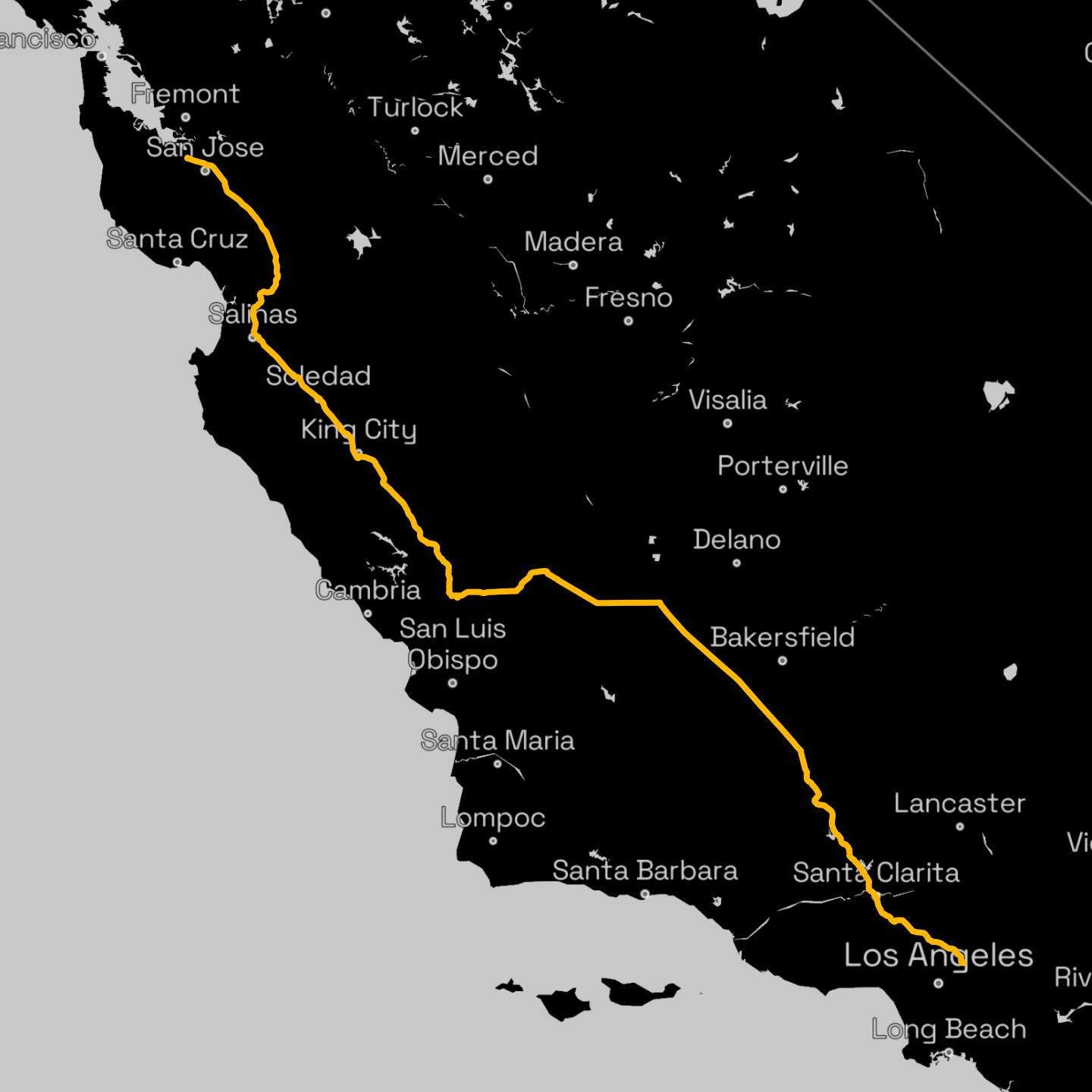
I found Paso Robles to be a sleepy town. My morning run was chillier, and I regretted not bringing gloves.
We couldn’t help it and had to visit the local children’s museum. At first we had low expectations — it’s housed within a former volunteer firehouse, just big enough for a single fire truck. But as we spent time there, we started to see the beauty in this 70-year-old building, and the care the small town and the people running the museum had put into the children’s experience. It was packed with ways for kids to be creative, whether painting or doing crafts, or to be social. At one point, every child was upstairs playing with a pneumatic ball contraption, working together to see if they could trigger a waterfall of plastic balls.
In the middle of our visit, we went next door for lunch at La Mexicana. It’s a colorful place with confident, talkative servers, murals painted on the wall, and each chair a different color — even the ceiling fans were painted.
It made me feel at home: cheese enchiladas and tacos piled high with lettuce — the Mexican-American food I grew up eating back in Texas and New Mexico. After lunch, we went back to the old volunteer firehouse and spent the rest of the day there.
We grew to love this little firehouse over the course of the day. I can’t believe it was just a dot on the map when I rushed by in my hurried drives of my 20s.
Road trip machine
We packed back into the Buzz, ready for the journey home. The trunk was big enough that if we were tired, we didn’t have to fully fold the stroller before putting it back in. For our kids, each stop to charge the car had turned into an adventure, exploring a new shopping complex.
 Leica CL · 56mm · f/1.4 · 1/160 ·
ISO 2500
Leica CL · 56mm · f/1.4 · 1/160 ·
ISO 2500
I’ll wait another half a year before putting together a full review of this vehicle. But this trip showed me that in this phase of my life, the ID. Buzz is perfect for us.
I used to feel sad when I saw others trading in their sports cars for a family van, and I was one of those people who thought I could never be caught dead in one. But I’ve realized that was silly, because there’s nothing I want to do more than spend time with my family exploring our corner of the world. And here in California, the center of American car culture, there’s no better way to explore than in a colorful two-tone van that fits the whole family.
Camera setup
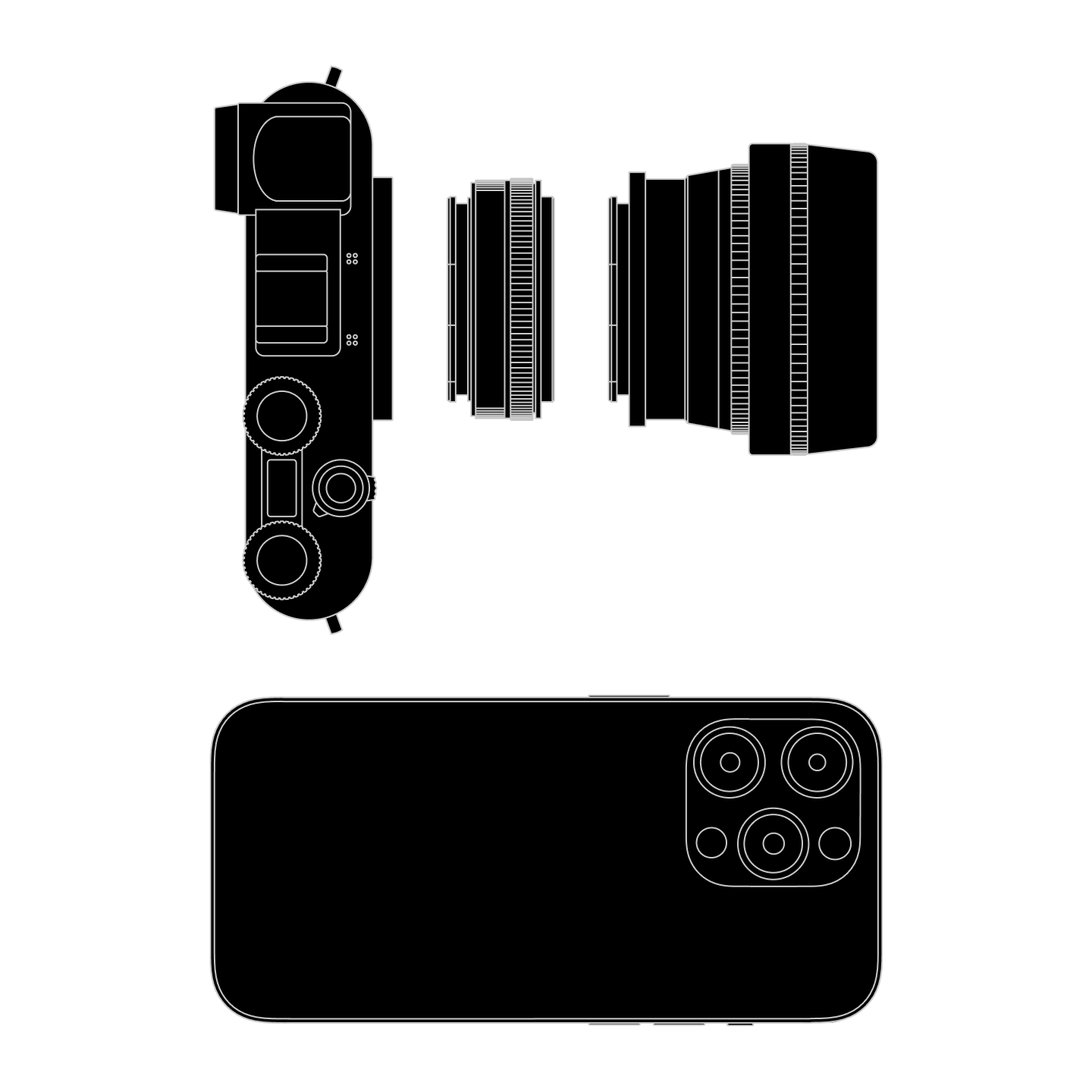
Thanks to Q for reading drafts of this.