
Yunnan II · Kunming
12 min read Apr 3, 2026
This is the second in a series of posts about our family trip to Yunnan.
Yunnan
After a few days acclimating to the new time zone in our home base of Shanghai, we took a short flight to the first stop in our tour of Yunnan: Kunming (昆明), the provincial capital.
 Leica CL · 18mm · f/10 · 1/13 ·
ISO 100
Leica CL · 18mm · f/10 · 1/13 ·
ISO 100
Kunming, like most of the cities we visited in Yunnan, sits in a remarkably unique geography. It’s at a high altitude of around 2,000 meters, but just north of the Tropic of Cancer — a combination that makes the weather mild year-round. Winters are cool but never cold the way they are in most of China. Summers are pleasant and never too hot. When we visited in winter, it felt a lot like the weather back home in California. Kunming has earned its nickname — the City of Eternal Spring — for exactly this reason.
The area has been inhabited for tens of thousands of years, with records of civilization spanning back more than two millennia. Those original kingdoms didn’t have writing systems, but they left behind extraordinarily detailed bronzes that allow historians to piece together their history — more on those later.
Over the past two thousand years, Yunnan has alternated between integration into neighboring Han dynasties and independent operation as its own kingdom. That began to change in the 13th century, when Kublai Khan’s Mongol forces conquered the region and established it as a formal province of China — moving the capital to Kunming in the process. The Ming Dynasty then consolidated that integration in the following century, and Yunnan has remained part of China ever since. It has a rich and distinct history, shaped in large part by its rugged mountain terrain and the independent character of its people. As a result, the region is home to dozens of ethnic minorities, each with their own language, customs, dress, and cuisine.
Green Lake Park
We stayed at the Green Lake Hotel, right next to the historic Green Lake (翠湖) — an older part of the city about half an hour by car from Kunming’s more modern center. The area dates back to the Yuan Dynasty. The lake itself was originally a bay of the larger Dianchi Lake nearby, and as water levels dropped over the centuries it became its own independent lake. The park is dotted with Qing Dynasty buildings and pavilions, and just across the ring road that borders it is the main gate of Yunnan University.
 Leica CL · 56mm · f/1.4 · 1/1250
· ISO 100
Leica CL · 56mm · f/1.4 · 1/1250
· ISO 100
We were lucky to be there during seagull season. Every year, black-headed gulls migrate from Siberia and spend November through March in the park. They’re quite different from the seagulls I’m used to seeing back home in the States, and they put on quite a show — swooping, diving, competing for food thrown by the crowds.
 Leica CL · 18mm · f/7.1 · 1/30 ·
ISO 100
Leica CL · 18mm · f/7.1 · 1/30 ·
ISO 100
 Leica CL · 56mm · f/1.4 · 1/400 ·
ISO 100
Leica CL · 56mm · f/1.4 · 1/400 ·
ISO 100
The park itself is compact, and the ring road around it with its walking and running path is just over a mile. I found that to be a perfect loop for early morning runs. I got up before sunrise to beat the crowds, since mornings and afternoons can get very busy with tourists. What surprised me was finding quite a few other runners out there — mostly elderly, some of them in modern carbon-plated shoes and jerseys from famous marathons around China. I was expecting the 2,000-meter altitude to be a challenge, but within a week my Garmin was telling me I had acclimated and was actually seeing some benefit from it.
At night the park transforms. Paper lanterns and LED lights reflect off the water, and that’s when we happened to spot a little train — actually a convoy of electric vehicles dressed up to look like one. We hired the driver and took a lap around the park while it blasted children’s music at full volume. My two kids were in absolute joy.
Guanghua Street
After checking in, we slipped out the back of the hotel and took a short walk over to Guanghua Street (光华街). It’s a historic district that was once a key hub on the Tea Horse Ancient Road, and the buildings span the full arc of Kunming’s history — Ming and Qing dynasty architecture through the early 20th century, with modern additions mixed in.
 Leica CL · 18mm · f/2.8 · 1/400 ·
ISO 100
Leica CL · 18mm · f/2.8 · 1/400 ·
ISO 100
We approached through the Duiyuelou (对月楼), better known as the Wine Cup Buildings. Two crescent-shaped buildings face each other with gracefully curved ends — they’re called the Wine Cup Buildings because their shape resembles the outer rim of a Chinese wine cup. They’re sometimes compared to Shanghai’s famous Wukang Mansion for the same curved facade. Unsurprisingly, the plaza they straddle was teeming with tourists and photographers, everyone taking turns getting the perfect shot.
 Leica CL · 18mm · f/2.8 · 1/1250
· ISO 100
Leica CL · 18mm · f/2.8 · 1/1250
· ISO 100
 Leica CL · 18mm · f/2.8 · 1/1000
· ISO 100
Leica CL · 18mm · f/2.8 · 1/1000
· ISO 100
Down some steps from there, we continued onto Guanghua Street proper — a beautiful mix of old architecture, street food, restaurants, and shops selling everything from fresh fruit to artisan clothing to third-wave coffee beans.
 Leica CL · 56mm · f/1.4 · 1/2000
· ISO 100
Leica CL · 56mm · f/1.4 · 1/2000
· ISO 100
Dounan Flower Market
The next morning after breakfast, we took the subway and a short taxi ride out to Dounan Flower Market (斗南花卉市场) — the largest flower wholesale market in Asia, which processes around 80% of all flowers sold in China. The complex is absolutely massive, spanning multiple warehouses, and clearly still growing — there were cranes and new construction going up all around us.
 Leica CL · 18mm · f/2.8 · 1/200 ·
ISO 100
Leica CL · 18mm · f/2.8 · 1/200 ·
ISO 100
 Leica CL · 18mm · f/1 · 1/1600 ·
ISO 100
Leica CL · 18mm · f/1 · 1/1600 ·
ISO 100
We didn’t make it for the wholesale auction, which happens in the very early hours around 3 or 4 a.m. But we arrived in time to see countless stalls selling nearly every kind of flower imaginable. One can easily buy as many flowers as you want and cheaply have them shipped across China.
 Leica CL · 18mm · f/1 · 1/50 ·
ISO 100
Leica CL · 18mm · f/1 · 1/50 ·
ISO 100
 Leica CL · 18mm · f/1 · 1/50 ·
ISO 160
Leica CL · 18mm · f/1 · 1/50 ·
ISO 160
The different buildings and sections each had their own character. Some areas were dedicated to dried goods — tea and dried mushrooms, both things Yunnan is particularly famous for. There was even a small aquarium tucked in somewhere, which we decided to skip. Since it was a cold winter day, tourists were sparse, but I could easily imagine how vibrant and bustling the place must get in summer. There were also plenty of restaurants and cafés on the ground floors of the buildings — you could easily spend half a day here if flowers are your thing.
Food
Kunming was our first taste of Yunnan’s food, and a preview of what became one of my favorite aspects of this part of the world.
Yunnan is famous for tea — it was, as I mentioned, a major stop on the Tea Horse Ancient Road. Unsurprisingly, tea sellers and tea shops are everywhere. One that stood out was Shangshan Hecha (上山喝茶), which translates literally as “go up the mountain to drink tea.” It’s a sleek, trendy tea shop based out of Yunnan that specializes in tea leaves grown in the region, though its drinks borrow liberally from modern bubble tea and coffee shop formats. A nice bridge between tradition and something new.
 Leica CL · 56mm · f/1.4 · 1/800 ·
ISO 100
Leica CL · 56mm · f/1.4 · 1/800 ·
ISO 100
 Leica CL · 56mm · f/1.4 · 1/400 ·
ISO 100
Leica CL · 56mm · f/1.4 · 1/400 ·
ISO 100
While we were on Guanghua Street, we also had a chance to eat insects. Insects are popular throughout Yunnan and in all the neighboring countries — Thailand, Myanmar, Laos. Given the lush vegetation and pleasant climate, there’s an enormous variety of edible bugs that locals have been eating for generations. I had some experience with ants and crickets in Mexico, but my kids had never tried anything like it. My wife and mother-in-law, however, have no fear of bugs whatsoever — they were completely game. So we bought a big bowl and worked our way through every variety on display. We all loved it. The kids each landed on a particular species they preferred based on taste or texture.
 Leica CL · 18mm · f/2.8 · 1/125 ·
ISO 100
Leica CL · 18mm · f/2.8 · 1/125 ·
ISO 100
 Leica CL · 18mm · f/2.8 · 1/50 ·
ISO 125
Leica CL · 18mm · f/2.8 · 1/50 ·
ISO 125
Finally, one dish we saw all over Kunming and eventually had at a proper sit-down restaurant: Crossing the Bridge Noodles (过桥米线). The name comes from a story about a scholar studying for the imperial exams on a small island in a lake. His wife made the long walk across a bridge every day to bring him lunch, but he was so absorbed in his books that he always forgot to eat until everything was cold. She eventually discovered that a very hot, fat-rich chicken broth stayed hot much longer than regular food, and that fresh ingredients — thinly sliced meats, vegetables — would cook instantly the moment they hit the broth. From then on, she packed everything separately, and the scholar would assemble a hot meal whenever he came up for air.
That logic is still the structure of the dish today. You receive a large bowl of piping hot broth — chicken, pork, or duck stock, with a thick layer of fat on top to hold the heat. Alongside it comes a long board loaded with toppings: sliced meats, raw fish, bean curd, chives, seasonal vegetables, and given that Yunnan has a tremendous range of edible mushrooms, plenty of those too. Everything arrives raw or barely cooked, and you add it in a prescribed order and let it cook at the table. The result is beautiful — each ingredient at exactly the right texture. We only had it once, but the kids couldn’t stop talking about it for the rest of the trip.
 Leica CL · 56mm · f/1.4 · 1/160 ·
ISO 200
Leica CL · 56mm · f/1.4 · 1/160 ·
ISO 200
The Yunnan Provincial Museum
One of our last stops in Kunming was the Yunnan Provincial Museum (云南省博物馆). The current building opened in 2015 near other museums and government institutions. It’s enormous — rectangular in form, but its architecture draws inspiration from traditional Yunnan folk housing. Admission is free and it’s open six days a week.
 Leica CL · 18mm · f/2.8 · 1/160 ·
ISO 100
Leica CL · 18mm · f/2.8 · 1/160 ·
ISO 100
The museum is particularly renowned for its collection of artifacts spanning from the Neolithic period and early human evolution all the way to modern times. The highlight is an important collection of early bronzes from the Warring States period — extraordinarily old objects that speak to how rich and sophisticated the culture here was, even this far from the traditional centers of Han civilization like Xi’an and Beijing.
 Leica CL · 18mm · f/2.8 · 1/50 ·
ISO 2500
Leica CL · 18mm · f/2.8 · 1/50 ·
ISO 2500
The most iconic piece is the Ox-Tiger Bronze Table — a large bronze table supported by a tiger biting a buffalo, with a small calf tucked beneath. It appears on what feels like every souvenir in the gift shop, and for good reason. It’s a striking object.
 Leica CL · 56mm · f/1.4 · 1/160 ·
ISO 500
Leica CL · 56mm · f/1.4 · 1/160 ·
ISO 500
I’ll be honest: my understanding of Yunnan’s cultures, of the Buddhism practiced here during the Dali Kingdom period, and of Chinese history in general is fairly limited. I could appreciate the extraordinary level of craft and detail on display, but I wasn’t able to fully grasp everything in its historical context. This is the kind of museum a scholar or a serious student of Chinese history would want to spend days in — and it’s one I intend to return to once I’ve learned more about the region.
 Leica CL · 56mm · f/1.4 · 1/500 ·
ISO 100
Leica CL · 56mm · f/1.4 · 1/500 ·
ISO 100
 Leica CL · 56mm · f/1.4 · 1/200 ·
ISO 100
Leica CL · 56mm · f/1.4 · 1/200 ·
ISO 100
What surprised me was that the museum wasn’t only about ancient history. The café served excellent pour-over coffee made with beans grown in Yunnan — a preview of what was to come, as I ended up finding affordable, delicious pour-over coffee made with local single-origin beans almost everywhere we went in the province. The kids, meanwhile, discovered a 3D printing machine that printed not in plastic but in candy, drawing each shape out in sugar. They each walked away with their favorite.
Closing thoughts
Kunming turned out to be a perfect entry point into Yunnan. It had a good balance of old and new — history and culture layered without any single site feeling overwhelming or overcrowded. Our hotel was a little dated, but comfortable, and being based near Green Lake helped us settle into the higher altitude and get our bearings in this entirely new part of China.
More than anything, Kunming gave us a preview of what the rest of Yunnan would offer. The food was exceptional — everything tasted genuinely fresh, especially the mushrooms, some of which aren’t available anywhere outside the region because they can’t last more than a day off the mountain. The coffee and tea were both excellent, grown locally in a province that has been cultivating both for centuries.
Most striking was the sense of encountering a culture quite different from the China we knew from Shanghai. The people here have their own history — one that is intertwined with the rest of China, but that has always maintained a certain independence. That thread ran through everything we saw and ate and experienced, and it made us eager for what was still ahead.
Camera setup
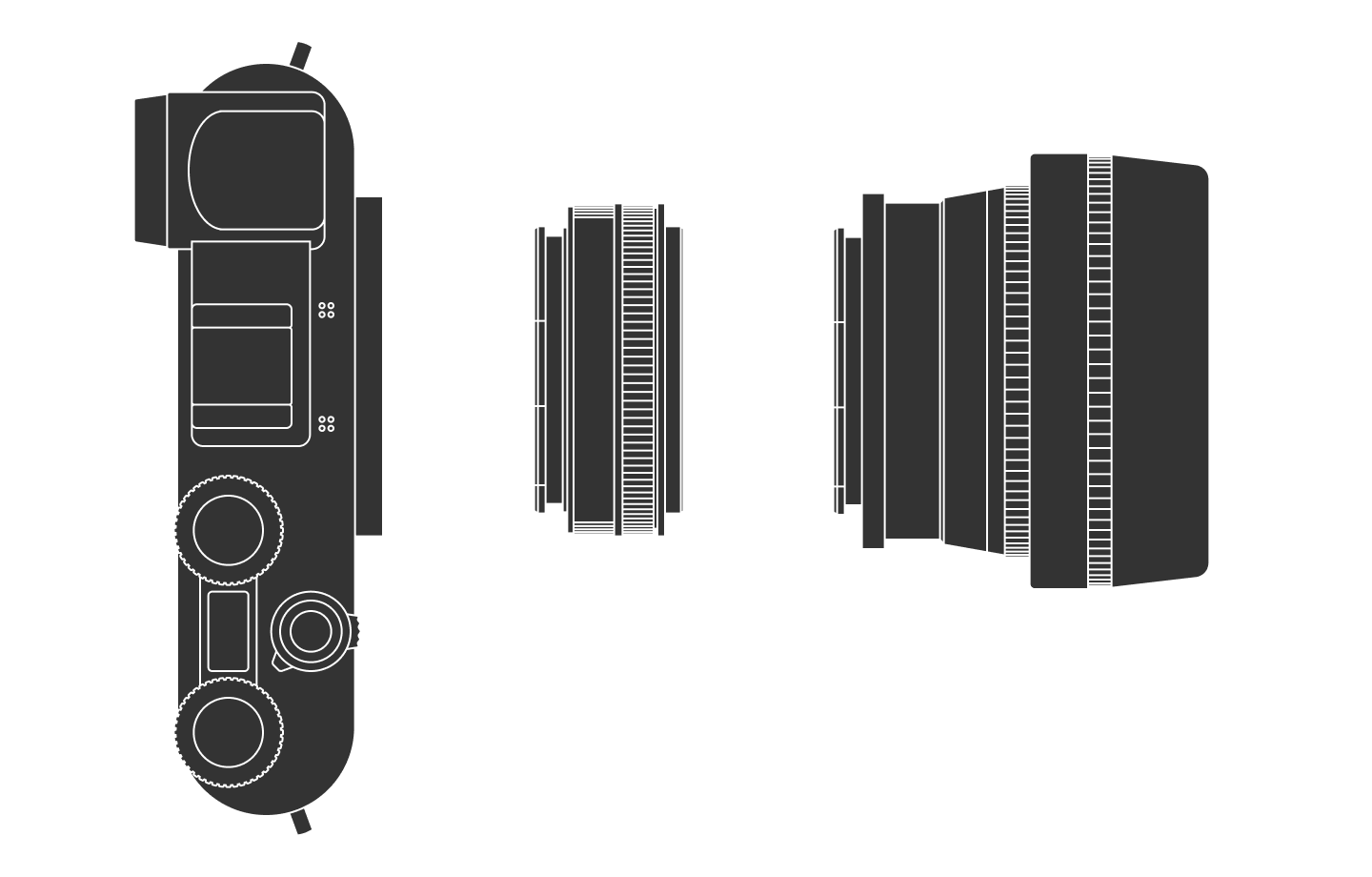
Thanks to Q for reading drafts of this.