
Naoto Fukasawa’s without thought catalogs
6 min read Mar 27, 2026
In this ongoing series, I share some of my favorite books from my personal library.
For most of the new millennium, Japanese designer Naoto Fukasawa ran an annual design workshop. The sixteenth and final edition was held in 2019, just before the pandemic. Each workshop gathered working designers in Japan who temporarily set aside client priorities to explore a single theme — and each culminated in a small exhibition and a catalog.
I came to these catalogs late, so I only own volumes 8 through 16. They are, essentially, picture books. As a child I learned more from pictures than from words, and these objects don’t require much explanation anyway.

The books themselves are modest objects. Most are thin — around half a centimeter — and measure roughly 15 by 20 centimeters.

Inside, there’s very little text — a brief statement on the meaning of without thought, a short note on the theme, and an index at the back listing each work alongside the designer and studio behind it. Everything in between is beautiful photographs of individual objects.
The workshops are structured around Fukasawa’s philosophy, which he calls without thought — the way people intuitively sense and use the things around them. He described it this way in an interview:
“People shouldn’t really have to think about an object when they are using it. Not having to think about it makes the relationship between a person and an object run more smoothly. Finding ideas in people’s spontaneous behavior and realizing these ideas in design is what without thought is about.” [1]
A parallel idea came from Jane Fulton Suri at IDEO, who called these moments thoughtless acts — “all those intuitive ways we adapt, exploit, react to things in our environment; things we do without really thinking.”[2] Both ideas describe the same thing — the hidden logic in how we actually inhabit the world.
The catalogs
Volume 8 ∙ Wipe
The theme is an action, not an object. Wipe. One standout example: makeup wipes pressed into the curved, stacking shape of a Pringle. The form solves nothing new, but it rhymes with a gesture everyone already knows.

Volume 9 ∙ Flower Vase
What is a vase, really? This volume explores how flower vases connect with their surroundings — what’s placed in them, what contains them, what they imply. My favorite presents vibrant flowers displayed inside the capsules from a gachapon machine. Something disposable, designed only to protect its contents in transit, living a second life as a vessel for those same contents. The question it asks is gentle but real.

Volume 10 ∙ Box
Spend a few minutes with the word box and the concept starts to expand. Some boxes are meant to be destroyed after opening. Others protect their contents for decades. One piece I loved is a cardboard box sized for a single slice of cake, its interior lined with a reflective material that suggests the whole cake the slice came from.

Volume 11 ∙ Container
A natural companion to Volume 10, container zooms out. The catalog is full of objects that use their shape to imply their contents — hair wax tins whose lids suggest the hairstyle the product enables, a toothpaste tube sculpted to the exact profile of toothpaste on a toothbrush. The object tells you what it’s for before you’ve thought to ask.

Volume 12 ∙ Washing Hands
Another action like wipe, this is something most of us do dozens of times a day without registering it. One piece stands out: a foaming soap dispenser designed to look like an ornamental flower in a vase. It fits so naturally on a bathroom counter that you might not immediately register what it is.

Volume 13 ∙ Feel Food
Eating can be extraordinarily deliberate — a tasting menu, a meal you’ve been anticipating for weeks — or it can be almost entirely automatic, your hand moving fork to mouth while your attention is somewhere else. This volume lives in that gap. My favorite piece is a drinking glass shaped like the bottom of a sparkling water bottle, its form quietly signaling what it holds.

Volume 14 ∙ Smart Phone
Published eight years after the iPhone’s introduction, this volume catches the moment when a genuinely new object had begun to feel inevitable. My favorite piece is a tracking keychain shaped like a Google Maps pin.

Volume 15 ∙ Station
For many city dwellers, a train station is one of the few places where you encounter a true cross-section of humanity in one space. The workshop explores the subtle, shared behaviors that emerge there. I was drawn to a porcelain plate painted with a transit map in blue. It feels as though public information has been made private.

Volume 16 ∙ Happy Moment
The final workshop is about happiness. It can seem like a grand emotion — reserved for weddings, arrivals, achievements, but it arrives constantly in smaller forms.
My favorites are twoglossy toy-like objects, one shaped like a Porsche 911, the other like a racing superbike. I feel a very physical sense of joy when I hold a beautiful miniature object. That’s the whole argument, made without a word.

On looking closely
What makes these catalogs worth keeping is that they don’t start from problems. They start from observation. Fukasawa again:
“I realized that when we actually use products, whether or not they are special is not that important. So I decided it would be a good idea to look at people’s subconscious behavior instead — or, as I call this principle, ‘design dissolving in behavior.’” [3]
The stakes of these workshops are deliberately low. There are no manufacturing targets, no business cases, no clients. The objects don’t need to exist beyond the exhibition. That freedom shows. These pieces go further, get stranger, land more precisely than most things that make it to market.
Flipping through these books reminds me how much of interesting design begins not with a new technology or a stated problem, but with someone paying close attention to what people already do. The behaviors are already there, waiting — small and unannounced, shaped exactly like the solution.
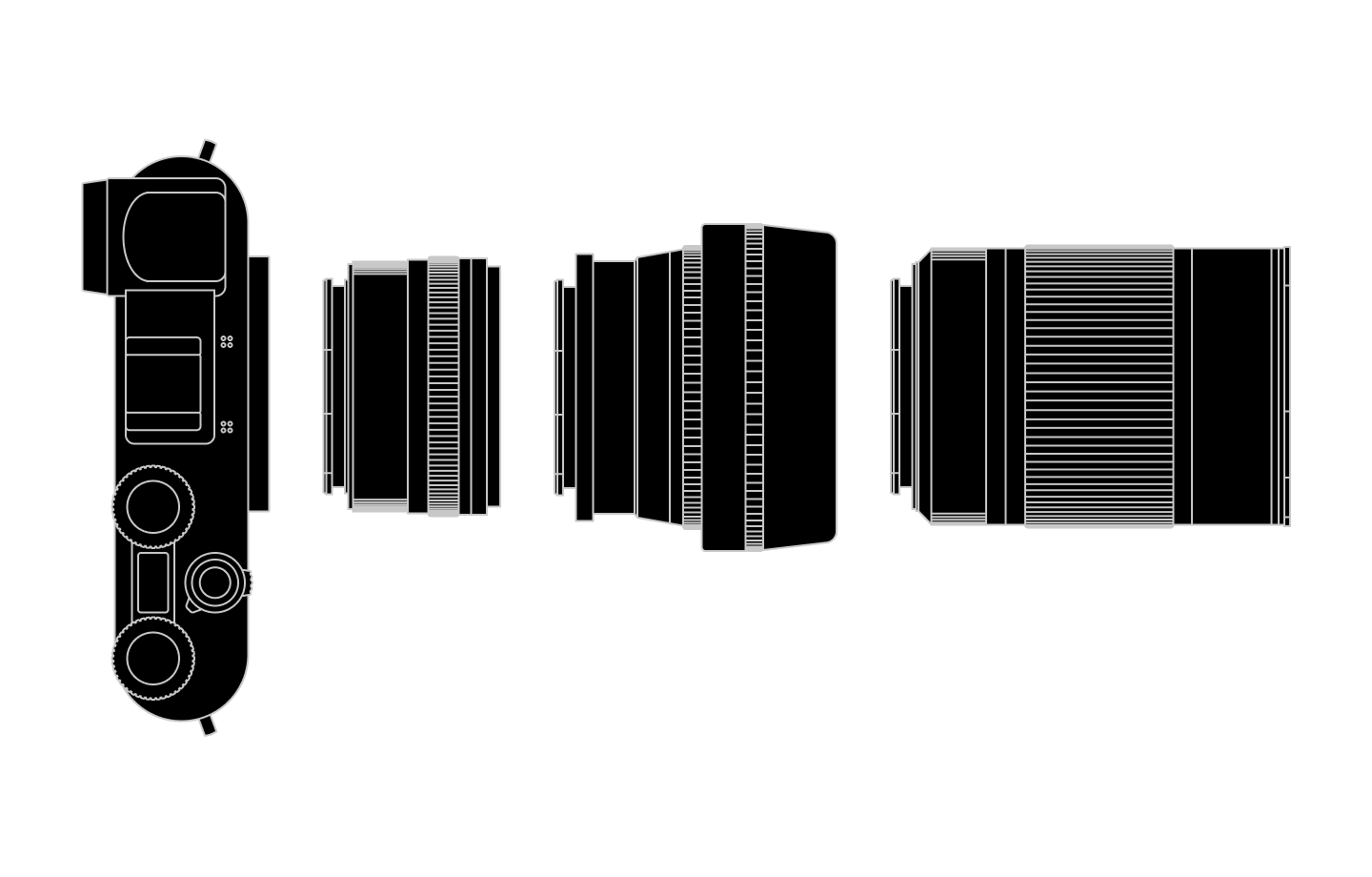
Camera setup
Thanks to Q for reading drafts of this.
- Without Thought: Naoto Fukasawa · Dwell.com ↩︎
- Thoughtless Acts?: Observations on Intuitive Design · Jane Fulton Suri ↩︎
- Without Thought: Naoto Fukasawa · Dwell.com ↩︎