
Creative Savannah
7 min read Dec 2, 2025 Updated Feb 26, 2026
After several days in Charleston, South Carolina, our family headed to another historic pre-revolutionary city – Savannah, Georgia.
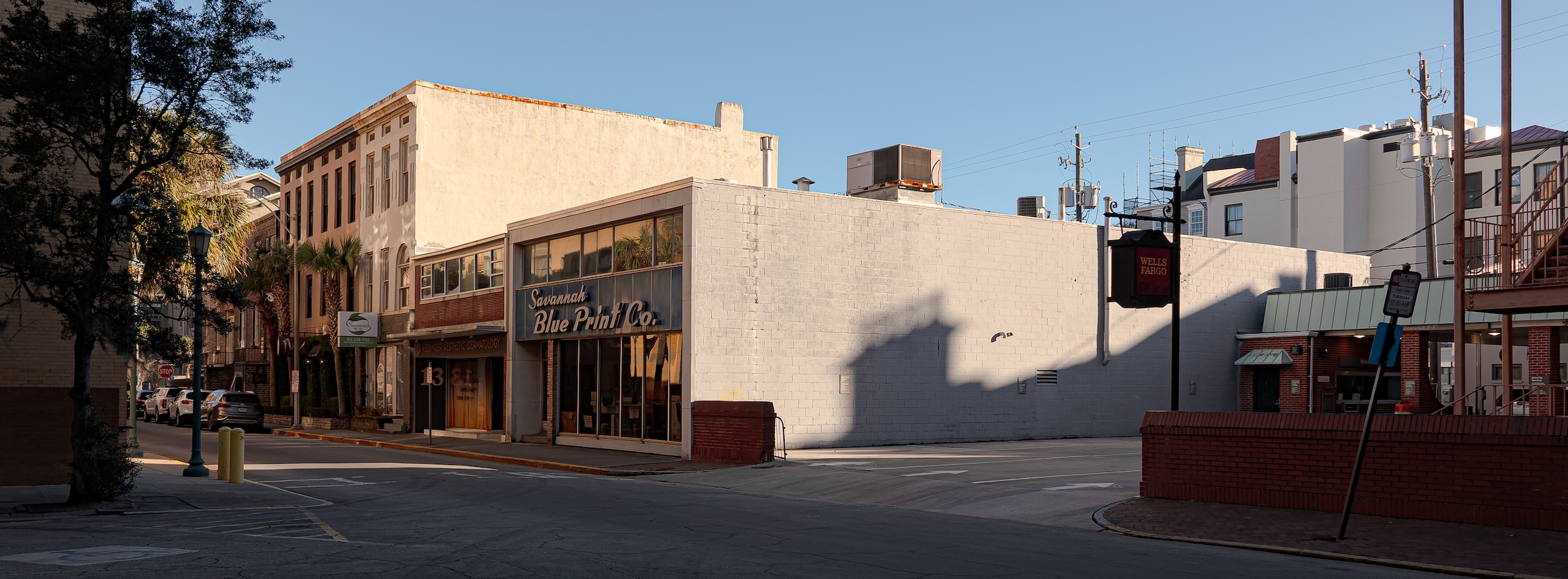
Its defining aesthetic feature is the Oglethorpe Plan – a city plan put forth by the governor of the then British Province of Georgia, James Oglethorpe.

This modular system was built around several wards, each surrounding a central square. Each ward was composed of four residential and four civic blocks. The wards functioned as a self-sufficient units, managing their own administration, farming, and defense.
 Leica CL · 56mm · f/1.4 · 1/200 ·
ISO 100
Leica CL · 56mm · f/1.4 · 1/200 ·
ISO 100
Though the wards have lost their organizing purposes, they have continued to ensure a tightly knit fabric of greenery, civic space, commerce, and places to live.
 Leica CL · 56mm · f/1.4 · 1/2000
· ISO 100
Leica CL · 56mm · f/1.4 · 1/2000
· ISO 100
Add in the Savannah College of Art and Design, which founded in 1978, feels the way NYU is in and around New York’s Greenwich Village and East Village. Its buildings are scattered across the cityscape.
 Leica CL · 18mm · f/2.8 · 1/4000
· ISO 100
Leica CL · 18mm · f/2.8 · 1/4000
· ISO 100
Though we were there during the winter break, I can imagine the vitality added by roaming creative young people. The educational institution has transformed historical buildings while its graduates create new local institutions like Origin Coffee Bar or leather goods store, Satchel.
 Leica CL · 18mm · f/5 · 1/400 ·
ISO 100
Leica CL · 18mm · f/5 · 1/400 ·
ISO 100
My favorite aspect of this city grid is that even though most intersections have traffic lights, the roads between parks have pedestrian crossings that cars must yield to. We calmly walked from park to park when going anywhere.
 Leica CL · 56mm · f/5.6 · 1/125 ·
ISO 12500
Leica CL · 56mm · f/5.6 · 1/125 ·
ISO 12500
Factors Walk
One of the defining features of the Savannah landscape to me is Factors Walk. This narrow alley is tucked away beneath the bluff that Bay Street runs along and River Street follows the river below.
 Leica CL · 18mm · f/2.8 · 1/1250
· ISO 100
Leica CL · 18mm · f/2.8 · 1/1250
· ISO 100
 Leica CL · 18mm · f/2.8 · 1/250 ·
ISO 100
Leica CL · 18mm · f/2.8 · 1/250 ·
ISO 100
This labyrinthine mix of brick arches, iron gangways, and former vaults and cotton warehouses features the rare verticality seldom seen in our built environments. Most of this area was built to serve the needs of cotton merchants, but today it has been transformed for tourists’ needs.
 Leica CL · 18mm · f/2.8 · 1/80 ·
ISO 100
Leica CL · 18mm · f/2.8 · 1/80 ·
ISO 100
 Leica CL · 18mm · f/2.8 · 1/800 ·
ISO 100
Leica CL · 18mm · f/2.8 · 1/800 ·
ISO 100
As we walked up and down the staircases, across the bridges and over the cobblestones, we tangibly feel the history in a way that no plaque or tour guide could explain.
We continued on and eventually found ourselves at the more touristy River Street..
 Leica CL · 18mm · f/2.8 · 1/400 ·
ISO 100
Leica CL · 18mm · f/2.8 · 1/400 ·
ISO 100
 Leica CL · 18mm · f/2.8 · 1/4000
· ISO 100
Leica CL · 18mm · f/2.8 · 1/4000
· ISO 100
Jepson Center for the Arts
The Jepson Center is Savannah’s Telfair Museums’ modern wing. Designed by Moshe Safdie, it fits modern elements like a glass atrium wrapped in curving stone walls into the historic city grid. Despite its decidedly modern appearance, it is able to coexist with the centuries-old buildings around it.
 Leica CL · 18mm · f/5.6 · 1/60 ·
ISO 100
Leica CL · 18mm · f/5.6 · 1/60 ·
ISO 100
 Leica CL · 18mm · f/5.6 · 1/160 ·
ISO 100
Leica CL · 18mm · f/5.6 · 1/160 ·
ISO 100
The children’s section was chock full of interactive art activities that both our children immersed themselves in. The cafe served me one of my favorite treats that trip — an affogato with ice cream from local legend Leopold’s topped with coffee from PERC.
 Leica CL · 18mm · f/5.6 · 1/200 ·
ISO 100
Leica CL · 18mm · f/5.6 · 1/200 ·
ISO 100
 Leica CL · 18mm · f/5.6 · 1/50 ·
ISO 2500
Leica CL · 18mm · f/5.6 · 1/50 ·
ISO 2500
This small concentration of contemporary art and architecture temporarily transported us far away from a city that otherwise feels like a time capsule.
 Leica CL · 56mm · f/3.5 · 1/160 ·
ISO 1000
Leica CL · 56mm · f/3.5 · 1/160 ·
ISO 1000
SCAD Museum of Art
Of the SCAD buildings open to the public, the one we spent the most time in is the SCAD Museum of Art. From the outside, it is obvious that this museum is an example of adaptive reuse.
 Leica CL · 18mm · f/4 · 1/640 ·
ISO 100
Leica CL · 18mm · f/4 · 1/640 ·
ISO 100
This railroad depot from the mid-19th century was preserved and then augmented with modern construction. The exterior of the museum is entirely the juxtaposition of centuries-old brick and brand new glass, concrete, and steel.
 Leica CL · 18mm · f/4 · 1/500 ·
ISO 100
Leica CL · 18mm · f/4 · 1/500 ·
ISO 100
The defining new feature of the building is the “lantern” entrance which rises multiple stories above the older brick building. Inside, this lamp-like structure bathes the interior in slightly tinted light.
 Leica CL · 18mm · f/14 · 1/13 ·
ISO 100
Leica CL · 18mm · f/14 · 1/13 ·
ISO 100
The museum collection is an eclectic mix of student work and world-renowned artists that you may find in any notable art museum.
 Leica CL · 18mm · f/2.8 · 1/50 ·
ISO 640
Leica CL · 18mm · f/2.8 · 1/50 ·
ISO 640
 Leica CL · 56mm · f/1.4 · 1/160 ·
ISO 320
Leica CL · 56mm · f/1.4 · 1/160 ·
ISO 320
The main exhibition, which we spent the most time in, was centered on George Clinton. I grew up not knowing much about George Clinton and came away from the exhibition revering his ability to build worlds using multimedia. The album art, the music, the paintings, the sets, and the costumes all feel like they come from one cohesive world.
 Leica CL · 56mm · f/1.4 · 1/160 ·
ISO 2000
Leica CL · 56mm · f/1.4 · 1/160 ·
ISO 2000
 Leica CL · 56mm · f/1.4 · 1/160 ·
ISO 1000
Leica CL · 56mm · f/1.4 · 1/160 ·
ISO 1000
 Leica CL · 18mm · f/2.8 · 1/50 ·
ISO 2000
Leica CL · 18mm · f/2.8 · 1/50 ·
ISO 2000
Coffee Culture
Savannah, though quite small in terms of population, punches far above its weight when it comes to the quality of coffee. I thankfully had a chance to visit PERC, which I first ran across when I began learning about pour-over coffee.
PERC sources beans from all over the world, including some rare places like India and China. Though they don’t offer as wide a variety of roast levels (they say most of their coffees are medium roasted), I find their coffees tend to have tea-like qualities. One of the bags of beans from Ethopia I bought home produced coffee that tasted just like blueberry.
 Leica CL · 18mm · f/5 · 1/400 ·
ISO 100
Leica CL · 18mm · f/5 · 1/400 ·
ISO 100
Origin Coffee Bar is a bit smaller in scale, yet on the inside, it’s quite obvious that it’s run by SCAD graduates. Its interior would feel like home to any world traveler.
 Leica CL · 18mm · f/2.8 · 1/100 ·
ISO 100
Leica CL · 18mm · f/2.8 · 1/100 ·
ISO 100
When Origin started out, they sourced their beans from PERC. As the years went on and they found their footing, they switched to roasting their own beans.
Because we were traveling with family, I didn’t have the chance to casually visit coffee shops. However, I made sure to take back several bags of beans from every shop I walked by to enjoy at home.
Tybee Island
One of the last things we did during our trip was experience the sunset at Tybee Island, a tiny barrier island just a short drive away from Savannah.
 Leica CL · 56mm · f/4 · 1/50 ·
ISO 12500
Leica CL · 56mm · f/4 · 1/50 ·
ISO 12500
As the setting sun turned from amber to a deep crimson, my wife and I strolled across sand covered almost entirely in broken seashells. The kids, wrapped up in thick jackets, played in the sand and water nonetheless.
 Leica CL · 56mm · f/1.4 · 1/320 ·
ISO 100
Leica CL · 56mm · f/1.4 · 1/320 ·
ISO 100
As the waves lapped to and fro, I reflected on the unexpected beauty and creativity I found in Savannah. From afar, I expected to find a place tightly grasping to a centuries-old identity. Instead, I found a place that was always reinventing itself — a place where old and new come together, whether in the world-renowned art school founded just 47 years ago or a nearly 300-year-old restaurant.
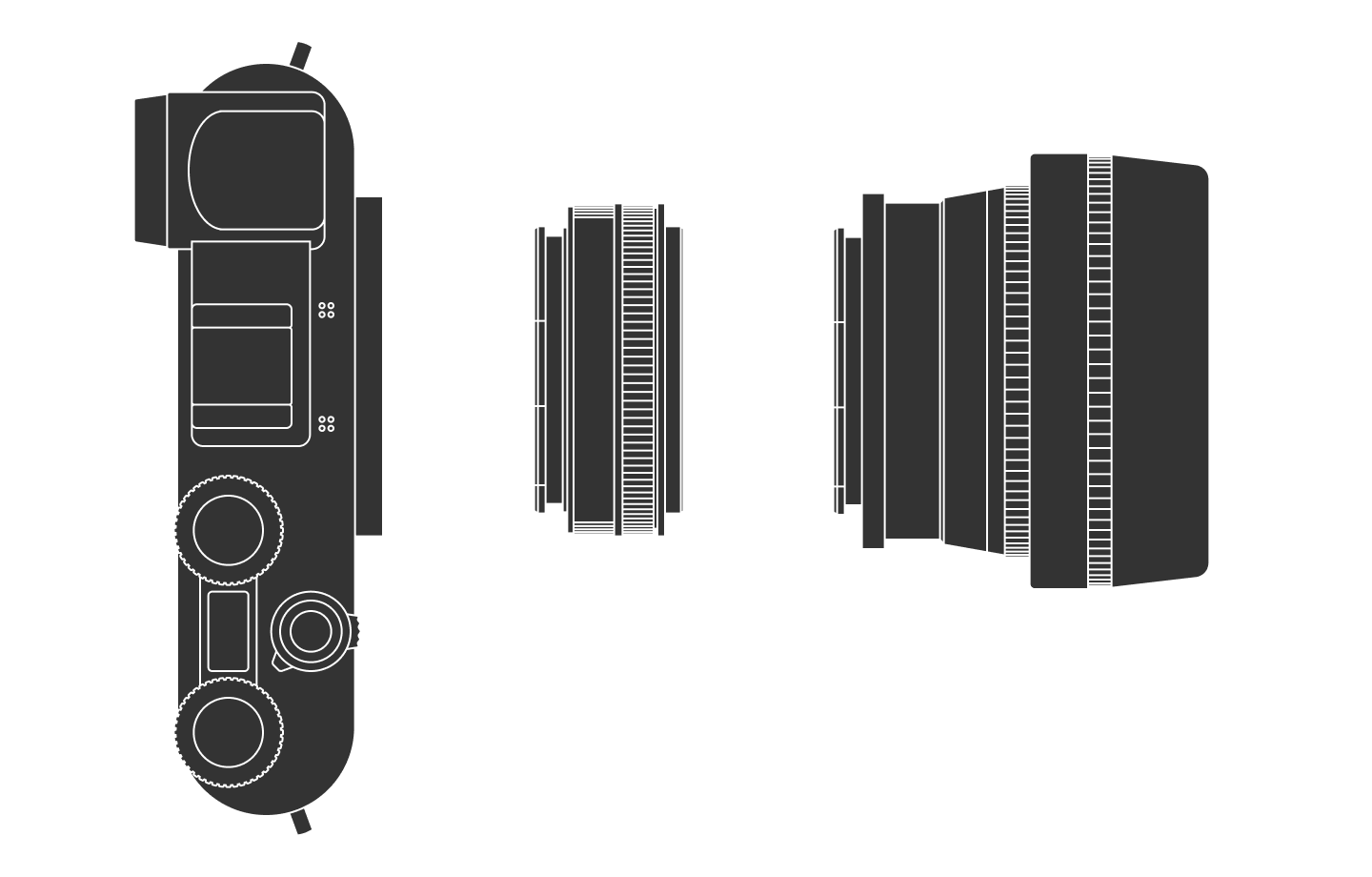
Camera setup
Thanks to Q for reading drafts of this.