
Osaka II ∙ cultural institutions
15 min read Nov 5, 2026
Osaka
When I think of Japanese culture, two places come to mind — Kyoto and Tokyo — old and new, respectively. Each can hold its own against the other major tourist cities of the world like Paris, London, New York. However, they don’t come without their downsides.
In recent years, favorable exchange rates, pent-up demand after COVID subsided and an uptick in interest in Japanese culture have made Kyoto a hotspot. As a result, the most popular attractions in Kyoto are overcrowded.
Tokyo, on the other hand, can absorb the influx of tourists due to its sheer geographic size. That scale leads to longer transportation time. In Tokyo, we regularly spend an hour on trains in the morning and evening.
This makes Osaka uniquely situated among Japan’s cities. It’s accessible via plenty of direct flights from out of the country and short-haul domestic flights within. Yet, the airport is a short ride from the city center, unlike Tokyo’s Narita. It’s small like Kyoto, meaning we spent at most 30 minutes on trains in the morning and evening.
I knew beforehand that Osaka has been a center of commerce for centuries, a topic I’ll discuss in the next issue. But I didn’t know much at all about its cultural institutions. I was prepared to be surprised.
Nakanoshima Museum of Art, Osaka
The first of the institutions we visited was the Nakanoshima Museum of Art. It gets its name from Nakanoshima, the sandbank between the Dojima and Tosabori rivers that it stands on. Since the Middle Ages, this island has been a trading center. It reminded me of Roosevelt Island in the way that it’s isolated from the rest of the city, accessible through bridges.
 Leica CL · 18mm · f/2.8 · 1/1600
· ISO 100
This Museum of Art is a massive, rectilinear work of contemporary minimalism. The surfaces are simple and unadorned, letting the materials and finishes speak for themselves.
Planning for the museum began in the early ’90s, but as the economic bubble burst, all work was halted. It wasn’t until the late 2010s that momentum started again. And then in 2022, the museum finally opened.
 Leica CL · 18mm · f/2.8 · 1/50 ·
ISO 640
Architecturally, the space is interesting enough that I could have walked its corridors and looked at the diagonally cutting staircases and escalators all afternoon. Light is carefully controlled in the space, bathing everything in a gradient between light and dark that brings out the textures of the various surfaces.
 Leica CL · 56mm · f/1.4 · 1/640 ·
ISO 100
Average Japanese buildings pull from a palette of light gray concrete, clear glass, light woods, and pastel colors. This, on the other hand, felt like a modern homage to traditional Japanese aesthetics. Darkness forms the canvas upon which light is selectively painted.
The main exhibition was a retrospective of Takashima Yajuro’s work 50 years after his passing. Spanning over 160 paintings assembled from myriad different collections, it is the largest exhibition of his work.
 Leica CL · 18mm · f/5.6 · 1/50 ·
ISO 6400
The artist was born in the late 1800s and was self-taught. He worked alone, not associating with the art groups as other artists from the time did. Aside from several years in Europe, he spent most of his career in Japan’s countryside.
Critics praise his work for its contemplative, spiritual sensibility. One of my favorites is a self-portrait of him in a chiaroscuro style, the shadows and highlights depicting a strong, focused expression on his face.
He had a whole series of paintings of candlelight. Walking between them, I could see the slight variations in the approach. He also recreated everyday subjects in painstaking detail like a vine full of tomatoes.
 Leica CL · 56mm · f/1.4 · 1/160 ·
ISO 2000
Outside this exhibition, the museum had several other things to serve us, such as Kenji Yanobe’s Ship’s Cat, a sculpture of a cat in an astronaut suit towering multiple stories above us.
 Leica CL · 18mm · f/5.6 · 1/50 ·
ISO 500
There was a gift shop selling curated objects from around Japan I’d never seen in other shops or museums.
 Leica CL · 56mm · f/1.4 · 1/160 ·
ISO 125
On the ground floor, there was a cafe and a showroom for Hay, the home goods and furniture brand now owned by Herman Miller. Outside on the street, the greenery matched the lushness that I’m used to seeing in Singapore.
 Leica CL · 18mm · f/2.8 · 1/160 ·
ISO 100
 Leica CL · 56mm · f/1.4 · 1/200 ·
ISO 100
I went in expecting a world-class art museum. I left better understanding Jun’ichirō Tanizaki’s critique in In Praise of Shadows. I could see that the construction techniques and scale of modern buildings don’t necessitate modern, lighter colors, materials and finishes.
Osaka Castle
Next among our list of places to visit was Osaka Castle. I got to see it several different ways. My first contact with it was on my early morning runs. But I didn’t explore its depths till we headed over as a family on a sunny day.
 Leica CL · 18mm · f/2.8 · 1/640 ·
ISO 100
 Leica CL · 18mm · f/2.8 · 1/250 ·
ISO 100
This castle, like many of the others in Japan, is housed within a massive park complex with broad walking paths and expertly manicured flora, both small and large. The weather was perfect, looking like a bright summer day, but without any of the associated heat or humidity. As we snaked through the paths, the castle towered above us, its white walls topped with light green roofs.
 Leica CL · 18mm · f/2.8 · 1/800 ·
ISO 100
 Leica CL · 56mm · f/1.4 · 1/6400
· ISO 100
This castle has had a long and storied history in Japanese culture. It was the seat of one of the major powers that took part in the Battle of Sekigahara. But after Tokugawa Ieyasu won and consolidated control over Japan, it slid, becoming one among many castles around the country. Like those other castles, it has burned down to the ground and been destroyed multiple times over its multi-century history. More recently, during World War II, it was a military arsenal and the grounds were mostly destroyed by Allied bombing in 1945.
 Leica CL · 56mm · f/1.4 · 1/5000
· ISO 100
 Leica CL · 56mm · f/5.6 · 1/640 ·
ISO 100
Architecturally, the external surfaces of the building look the way they did back before the start of the Tokugawa shogunate. But inside, it is a work of steel and concrete, impervious to the earthquakes that Japan is regularly hit with. The stone walls are built in the traditional way. Each unique rock is expertly carved and fit together, weighing up to hundreds of tons apiece.
 Leica CL · 56mm · f/1.4 · 1/12000
· ISO 100
 Leica CL · 56mm · f/1.4 · 1/16000
· ISO 100
On our visit to Kenrokuen in Kanazawa the year before, we learned how surprisingly simple, yet enjoyable a visit to a grand park like this can be. The children naturally run through the wide open spaces and climb up staircases and walls. My wife and I get the chance to enjoy relative quiet.
 Leica CL · 56mm · f/1.4 · 1/16000
· ISO 100
 Leica CL · 56mm · f/1.4 · 1/12000
· ISO 100
The castle also served as the stage for watching tourists from all around the world. Some of them were dressed up like samurai, others walking wide-eyed, taking photographs of everything.
 Leica CL · 56mm · f/1.4 · 1/8000
· ISO 100
 Leica CL · 18mm · f/5 · 1/640 ·
ISO 100
Running culture around the castle
On my morning runs, since we were about a mile away from the castle, I would leave our lodging when it was dark and the sun would rise halfway through. I’d jog up the nearly empty streets, passing a shopkeepers opening their stores and office workers walking to the train station. I’d make it over to the castle grounds and run a loop, taking in the sights of the castle and its surroundings.
 iPhone 16 Pro · 5x · f/2.8 ·
1/576 · ISO 50
I’d focus on my breathing and the lightness of my steps. The morning light would cast long shadows over the paths ahead. All along, the castle at the center served as a central landmark, obviating the need to look at my phone or watch for directions.
 iPhone 16 Pro · 1x · f/1.8 ·
1/1770 · ISO 80
Early morning runs always feel surreal, like a dream. Those castle runs felt even more so. While the crisp air bit at my skin, I could see in vivid detail the raw textures of grass, stone, tree bark, and gentle ripples over the moat. The place teeming with people during the day was nearly empty.
 iPhone 16 Pro · 1x · f/1.8 ·
1/3891 · ISO 80
Expo ‘70 Commemorative Park and the Tower of the Sun
Ever since childhood, I’ve had an obsession with world’s fairs. It all started when I first visited Epcot. The Disney Park is based on the world’s fairs, with pavilions dedicated to countries and topics like science and technology. I fell in love with the blend between amusement park and museum.
Since then, I started to notice the remnants of the world’s fairs everywhere I went. When I lived in Flushing, NY, I would walk the boulevards in Flushing Meadows Corona Park, imagining the pavilions that lined both sides half a century ago.
In San Francisco, when I walk through the Palace of Fine Arts or stop by Treasure Island, I again imagine the revelers from centuries past.
Osaka has its own storied history of world’s fairs. Last year, it played host to the 2025 World’s Fair for a second time. The first was in 1970, when my parents’ generation were children. Osaka too has a few choice remnants.
 Leica CL · 56mm · f/1.4 · 1/8000
· ISO 100
The most noticeable is a gigantic statue, the Tower of the Sun, which towers above everything else, the way the New York State Pavilion and the Unisphere do over Flushing Meadows Park.
 Leica CL · 56mm · f/1.4 · 1/1250
· ISO 100
But back in 1970, it stood out far less as the centerpiece of the massive Festival Plaza designed by Kenzo Tange. At the time, Tange imagined an uninterrupted rectilinear building with a roof made of a lattice-like structure and multiple different levels housing experiences related to the future that lay ahead.
 Leica CL · 18mm · f/2.8 · 1/100 ·
ISO 100
The thing that struck right at the heart of this modernist vision was the Tower of the Sun. Its creator, Taro Okamoto, was famous for not being the biggest fan of modern technology. Yet, he had a friendly and productive relationship with his friend Tange, a devout follower of Western Modernism. His statue sprouted out from a circular hole that was cut into Tange’s building. While the pavilion looked to a potential future, the statue was formed around our past.
 Leica CL · 56mm · f/1.4 · 1/160 ·
ISO 800
And funny enough, the Tower of the Sun is the only thing that remains aside from sections of the building that were saved for posterity.
This statue was, for a long time, closed off to the public while in disrepair. But in recent years, through great effort, the interior and the exterior were restored. After decades of being closed, it was opened again for visitors.
 Leica CL · 18mm · f/2.8 · 1/50 ·
ISO 3200
 Leica CL · 56mm · f/1.4 · 1/160 ·
ISO 5000
Inside, it’s nothing like what I expected — a staircase and empty interior like any other tower. But instead, the interior is even more intricate than the outside.
 Leica CL · 18mm · f/2.8 · 1/50 ·
ISO 4000
Forming the heart of this tower is the massive “Tree of Life”. Numerous animals are placed along its trunk, tracing the evolution of life on Earth.
 Leica CL · 56mm · f/1.4 · 1/160 ·
ISO 2500
Along the edges of the tower, we walked the staircases, following them up to the tower’s arms, where back in 1970, there used to be an exit out onto the pavilion’s roof.
 Leica CL · 18mm · f/2.8 · 1/50 ·
ISO 4000
The smells, the textures, the materials used for the tree and animals, and Toshiro Mayuzumi’s “Ode to Life” soundtrack all transported me away to a world that I last remember sensing as a child. It reminded me of those old exhibits at Epcot that have since been torn down, of the tail end of modernism in many of the public spaces that I frequented as a child. It was a portal to another world, and only when I returned to the exterior did I feel normal again.
Aside from that experience in the tower, there were plenty of historical artifacts and exhibits about the World Expo, like several models of the whole expo at various scales.
 Leica CL · 18mm · f/2.8 · 1/50 ·
ISO 640
They had costumes worn by the staff who tended the various pavilions, and a grand collection of graphic design.
 Leica CL · 18mm · f/5 · 1/50 ·
ISO 800
 Leica CL · 18mm · f/5 · 1/50 ·
ISO 800
The gift shop was full of gems, many featuring Taro Okamoto’s artwork.
 Leica CL · 56mm · f/1.4 · 1/400 ·
ISO 100
We didn’t know what to expect when we first went to this park, thinking we would have a stroll together, talk about life. But I came away realizing that within that statue exists a portal to a world that exists in another time and space altogether.
 Leica CL · 18mm · f/2.8 · 1/200 ·
ISO 100
tempt
In our travels, we make sure to eat well. Osaka was no different, giving us the opportunity to enjoy the fresh seafood and regional delicacies the city is known for. I tend to put the camera away while eating, but I did stumble upon a cafe, camera in hand, while my wife and children visited the Osaka Tenmangu.
 Leica CL · 18mm · f/5 · 1/250 ·
ISO 100
tempt coffee is hidden behind an unassuming facade. I grabbed an oversized coffee bean carved from hard wood, pulling open the door.
 Leica CL · 18mm · f/5 · 1/50 ·
ISO 200
Inside, I was greeted with shelves of coffee beans and equipment, an interior of white walls and warm-colored wood. The smiling proprietor stood behind the bar in front of a menu featuring all manner of exotic beans from around the world.
 Leica CL · 18mm · f/5 · 1/100 ·
ISO 100
I ordered a cup of what I knew I’d enjoy, single-origin beans from Ethiopia, washed process. As he began the process of pouring the coffee by hand, I noticed he was using many of the accoutrements I see around the world — an orange Origami dripper sitting atop a Kinto decanter. He weighed the beans on a Timemore scale and poured from a Fellow gooseneck kettle.
 Leica CL · 56mm · f/1.4 · 1/160 ·
ISO 1600
At that point, I would have been forgiven for dismissing tempt as nothing more than yet another manifestation of Airspace. But, I could see that tempt, like many others, is operating within a universally recognizable genre of third-wave coffee shop, but taking its own unique approach.
 Leica CL · 56mm · f/1.4 · 1/160 ·
ISO 640
It’s when taking in the aesthetic qualities — the slight acidity and fruity notes of the coffee in hand, the sturdy handmade built-in furniture — that I started to see what makes tempt special. As I sipped, I noticed how the coffee shop gives way to a craft beer bar in the afternoon. Osaka is full of little places like this, unassuming at first, but full of little surprises if you look closely.
Uncovering Osaka’s surprises
Osaka opened my eyes to the deep veins of history that may not be obvious at first glance. In places like Tokyo or Kyoto, I come in with expectations from postcards and photos. Even Kanazawa, though more off the beaten path, has Kenrokuen and its old towns.
Osaka, on the other hand, feels more down to earth in comparison to Tokyo. It’s more modern than Kyoto. It’s more commercial than Kanazawa.
At face value it might seem like just another big city along the Tokaido. On closer inspection, it reveals its hidden wonders.
The Nakanoshima Museum of Art marries traditional Japanese aesthetics with modern form and scale. Osaka Castle provides a bridge to a past long gone, and the stage for noticing my body as I ran those early mornings. The Tower of the Sun, within its skin, hides a portal to a retro future on a distinct plane of time and space. tempt connects Osaka to broader global culture.
Osaka has earned its place as one of my favorite places to spend time in the land of the rising sun.
Camera setup
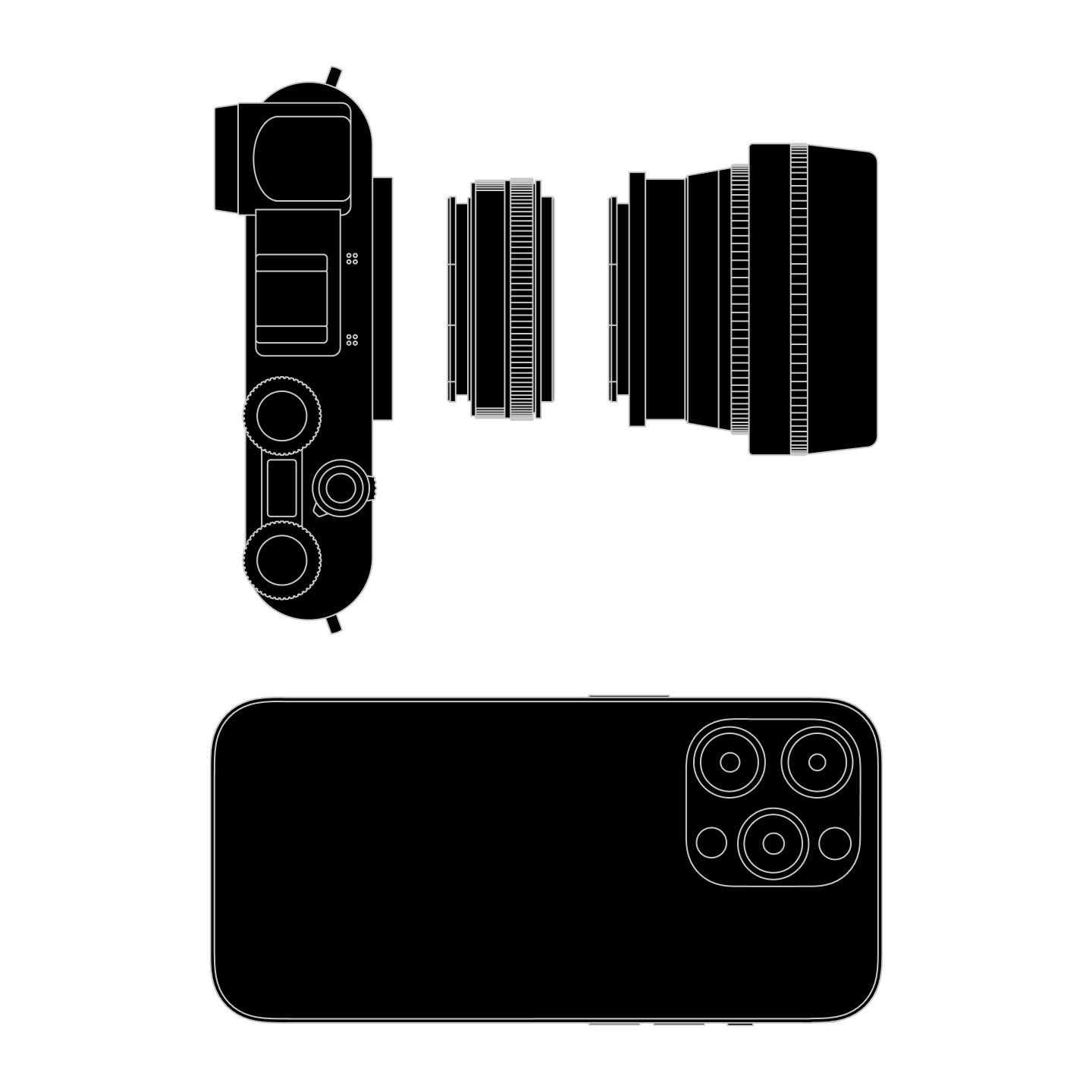
Thanks to Q for reading drafts of this.