
Kanazawa I · On the way
6 min read Feb 8, 2026 Updated Feb 26, 2026
This is part one of a four-part series about our family trip to Kanazawa.
Kanazawa
Kanazawa. It’s a city on the north coast of Japan that has been at the top of my list since my first trip to Japan.
Looking back, Kanazawa may be my favorite place in Japan so far, but I’m getting ahead of myself. More on that point later in the series.
We made our way over to Tokyo Narita via ZIPAIR and their economical, no-nonsense flight from SFO to NRT.
 Leica CL · 18mm · f/2.8 · 1/1000
· ISO 100
Leica CL · 18mm · f/2.8 · 1/1000
· ISO 100
The flight went just about as well as I could expect an intercontinental flight with two children. When we landed, we were greeted by my in-laws, who had made the short trip over from Shanghai just a few hours before us. Since it was already night, we spent the night in Hotel Nikko Narita.
The rooms were comfortable and there even was a Lawson downstairs that gave us a chance to grab a quick bite before we fell asleep.
Feeling the full effects of jet lag, we awoke early for the restaurant buffet, which was unbelievable. The combination Japanese and Western style buffet was top-notch in quality and variety. I wouldn’t think twice about returning. An added bonus is that we could see Narita and trains going to and from Tokyo right from our hotel room.
 Leica CL · 56mm · f/1.4 · 1/320 ·
ISO 100
Leica CL · 56mm · f/1.4 · 1/320 ·
ISO 100
After breakfast, we headed back to Narita via the free hotel bus to catch the Narita Express to Tokyo. Looking back today, we would have been better off flying domestic directly to Kanazawa. It would’ve been both cheaper and quicker. However we chose the train to give our kids a new experience.
From Tokyo, we transferred over to the Hokuriku Shinkansen. One of Japan’s newer high-speed rail lines, it first opened in 1997 for the Nagano Winter Olympics and was extended further to Kanazawa in 2015 and to Tsuruga in 2024.
 Leica CL · 56mm · f/16 · 1/50 ·
ISO 100
Leica CL · 56mm · f/16 · 1/50 ·
ISO 100
 Leica CL · 56mm · f/1.4 · 1/2500
· ISO 100
Leica CL · 56mm · f/1.4 · 1/2500
· ISO 100
The new trains along the line were designed by Ken Okuyama. He is best known for designing one of the most iconic supercars — the Ferrari Enzo.
 Leica CL · 56mm · f/6.3 · 1/1000
· ISO 100
Leica CL · 56mm · f/6.3 · 1/1000
· ISO 100
The Railway Museum, Omiya
Along the Shinkansen route from Kanazawa to Tokyo is Omiya Station. The city was historically quite small, but all of that changed soon after the Meiji Restoration in 1885 when Omiya was selected as the point where the Tōhoku Main Line would branch off from the existing Ueno to Takasaki line.
 Leica CL · 18mm · f/2.8 · 1/2500
· ISO 100
Leica CL · 18mm · f/2.8 · 1/2500
· ISO 100
 Leica CL · 56mm · f/1.4 · 1/5000
· ISO 100
Leica CL · 56mm · f/1.4 · 1/5000
· ISO 100
Nine years later in 1894, Omiya’s fortunes continued when the Nippon Railway opened a factory near the station. As tea and silk production flourished in the early 1900s, Omiya cemented itself as an important railway hub.
 Leica CL · 56mm · f/1.4 · 1/5000
· ISO 100
Leica CL · 56mm · f/1.4 · 1/5000
· ISO 100
 Leica CL · 56mm · f/1.4 · 1/160 ·
ISO 160
Leica CL · 56mm · f/1.4 · 1/160 ·
ISO 160
In 1922, back in Tokyo, the Transportation Museum was opened near Tokyo Station. This museum soon relocated to Manseibashi Station where it operated all the way until 2006 when it passed the baton to the current Railway Museum.
Once we reached Omiya Station via the Shinkansen, we took a short ride on the New Shuttle, a rubber-tired people mover much like an airport tram.
 Leica CL · 56mm · f/1.4 · 1/160 ·
ISO 250
Leica CL · 56mm · f/1.4 · 1/160 ·
ISO 250
Another short walk later, we were at the covered entrance into the cavernous Railway Museum. I’ve written at length about our experience there in my earlier post, Family adventures in Tokyo.
 Leica CL · 56mm · f/1.4 · 1/2500
· ISO 100
Leica CL · 56mm · f/1.4 · 1/2500
· ISO 100
 Leica CL · 18mm · f/2.8 · 1/160 ·
ISO 100
Leica CL · 18mm · f/2.8 · 1/160 ·
ISO 100
Mentai Park Gunma
Mentai Parks are dotted across Japan, mostly in areas best accessed via car. The location at Gunma is close to Takasaki (the historical terminus of the railway I mentioned earlier, the Ueno-Takasaki line).
 Leica CL · 56mm · f/1.4 · 1/6400
· ISO 100
Leica CL · 56mm · f/1.4 · 1/6400
· ISO 100
We took a taxi over and a local train back to Takasaki when staying there.
 Leica CL · 18mm · f/2.8 · 1/400 ·
ISO 100
Leica CL · 18mm · f/2.8 · 1/400 ·
ISO 100
Mentai Park is dedicated to mentaiko, a form of salted pollock roe. It traces its history to Korea in the 17th century or even earlier.
 Leica CL · 18mm · f/4 · 1/200 ·
ISO 100
Leica CL · 18mm · f/4 · 1/200 ·
ISO 100
My wife and I snuck away from the rest of the family for a small date and returned back with some delicacies to enjoy.
 Leica CL · 18mm · f/4 · 1/50 ·
ISO 100
Leica CL · 18mm · f/4 · 1/50 ·
ISO 100
Read more about our experience there in Family adventures in Tokyo.
 Leica CL · 56mm · f/1.4 · 1/3200
· ISO 100
Leica CL · 56mm · f/1.4 · 1/3200
· ISO 100
Fujiko F. Fujio Hometown Art Gallery
We stopped by this little museum on our way back to Tokyo from Kanazawa. Located in Takaoka, where Doraemon creator Fujiko F. Fujio (Hiroshi Fujimoto) grew up, it has a biographical focus — meanwhile, the Fujiko F. Fujio Museum near Tokyo is focused on Doraemon and other characters he created. Unfortunately photos were not allowed inside.
It’s located on the second floor of the Takaoka Art Museum. The building, with its suspended canopy outside and mix of rectilinear and rounded forms, felt straight out of a sci-fi film.
 Leica CL · 18mm · f/2.8 · 1/50 ·
ISO 125
Leica CL · 18mm · f/2.8 · 1/50 ·
ISO 125
 Leica CL · 18mm · f/2.8 · 1/2000
· ISO 100
Leica CL · 18mm · f/2.8 · 1/2000
· ISO 100
This museum was a must-visit for my wife, who has been a lifelong fan of Doraemon — so much so that she has a shrine to him full of manga and figurines at our home. It helped her better understand where Fujio found his inspiration.
A City Across Time
After several hours of smooth riding through snowcapped mountains and alongside the northern coast of Japan, we arrived in Kanazawa Station.
 Leica CL · 56mm · f/1.4 · 1/2000
· ISO 100
Leica CL · 56mm · f/1.4 · 1/2000
· ISO 100
As we exited through the iconic Tsuzumi-mon, a modern reinterpretation of Torii gate and Tsuzumi drum, we were weary, yet excited.
Little did we know, this gate would be a symbol for what we were about to experience — a city that exists in multiple eras simultaneously. We were delivered by a Ferrari designer’s train to Kanazawa, where an award-winning modern art museum coexists with a centuries-old samurai district.
It’s a place where these elements don’t just coexist, but derive their essence from the same core ideas.
 Leica CL · 18mm · f/5 · 1/50 ·
ISO 6400
Leica CL · 18mm · f/5 · 1/50 ·
ISO 6400
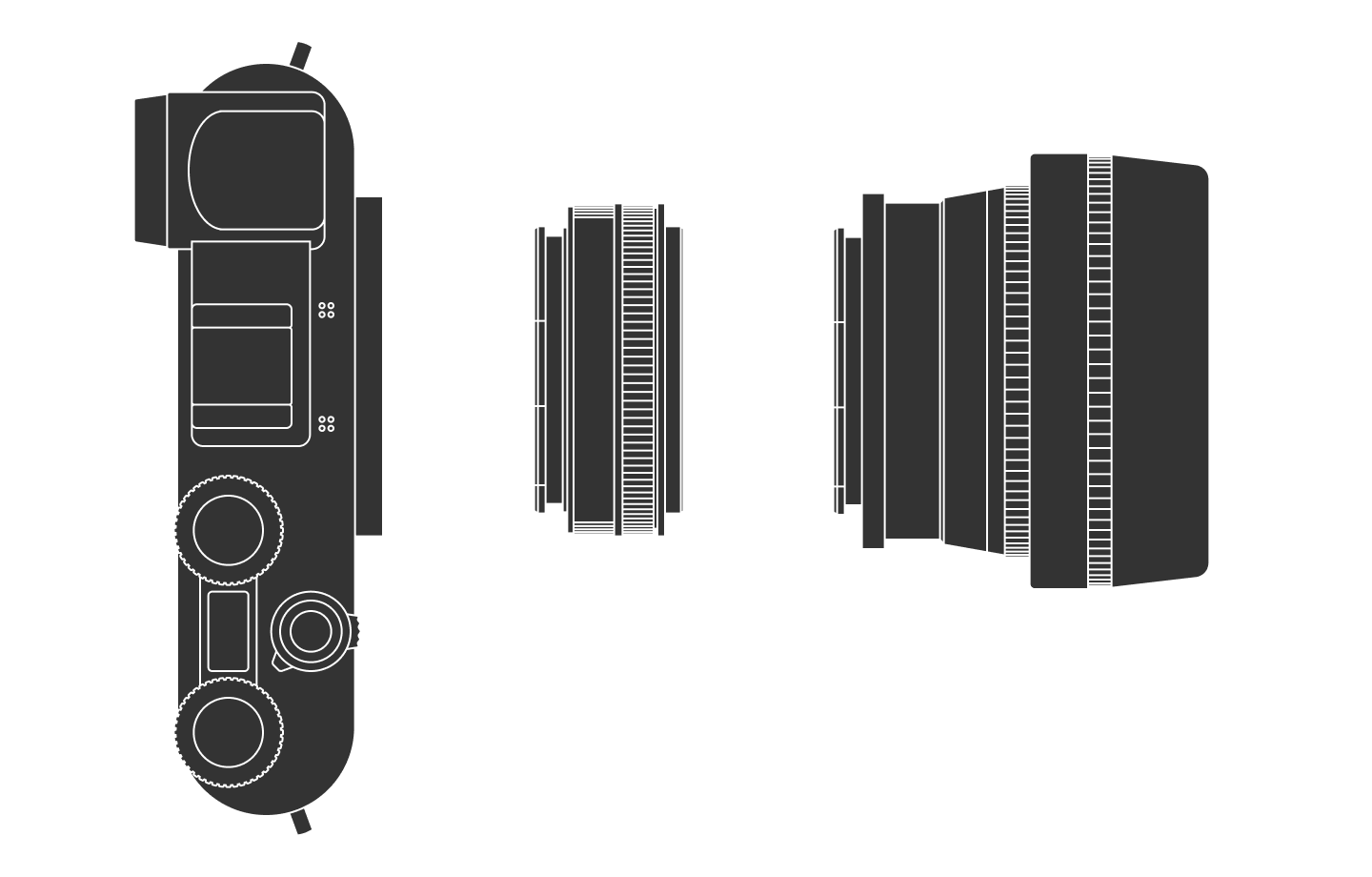
Camera setup
Thanks to Q for reading drafts of this.